2026 Top Strawberry Clamshell Types for Global Buyers
In 2026, global berry buyers will judge a Strawberry Clamshell by more than its transparent appearance. Protection, ventilation, stacking strength, and recyclable design now influence purchasing decisions. A strong package should keep strawberries visible, dry, and stable from farm to retail shelf.
Packaging consultant Elena Marquez explains, “The best clamshell protects freshness without hiding the berry’s condition.” This practical principle matters during long-distance shipping. A well-designed pack can reduce crushing, moisture buildup, and unnecessary product handling. Small details matter, including hinge strength, vent placement, label space, and the fit between the punnet and outer carton.
This guide examines the leading Strawberry Clamshell types for global buyers in 2026. It considers recycled PET, rPET, compostable fiber blends, ventilated formats, and stackable retail designs. Each option offers benefits, but none solves every supply-chain problem. That is worth admitting.
Some formats look sustainable but lack moisture resistance. Others protect fruit well but increase material use. Buyers should compare real performance, not attractive claims. Testing should include cold storage, vibration, compression, and shelf display conditions.
The best choice depends on the berry variety, shipping distance, climate, and sales channel. A premium supermarket may prefer crystal-clear presentation. A wholesale distributor may prioritize nesting efficiency and carton stability. Regional recycling systems also deserve attention.
There is no universal winner. The right Strawberry Clamshell balances protection, visibility, cost, and responsible material selection. Careful trials remain essential before large-scale purchasing decisions.
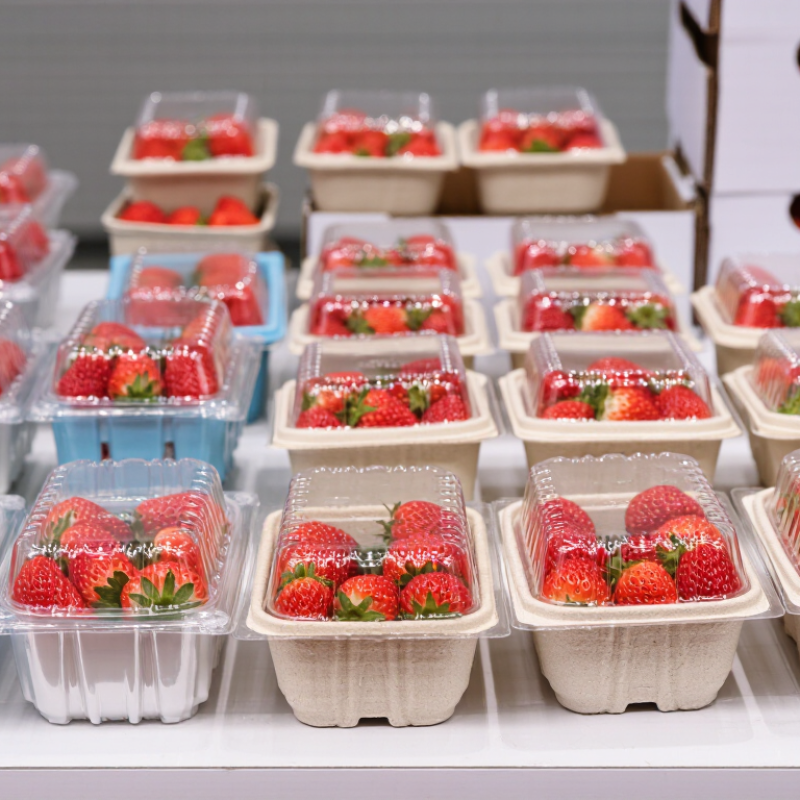
What Strawberry Clamshells Are and Why They Matter in 2026
Strawberry clamshells are clear, hinged containers designed to protect delicate berries during packing, transport, and retail display. Their rigid shape reduces crushing when cartons are stacked. Small ventilation holes help release heat and moisture, which can slow quality loss after harvest. However, ventilation must match the berry size, shipment distance, and cooling process.
In 2026, global buyers commonly compare standard PET clamshells, recycled-content plastic options, and fiber-based designs with transparent panels. Each type has trade-offs. Clear plastic supports strong visibility and moisture resistance. Fiber formats may support sustainability goals but can soften under wet conditions. A well-designed lid should close securely without bruising fruit. It should also open smoothly for inspection. No clamshell solves every supply-chain problem. Poor cooling can still create condensation, even inside excellent packaging.
Tips: Check hinge strength, lid alignment, ventilation size, stacking performance, and label space before ordering. Test samples with real berries, not empty containers. Measure temperature changes during a realistic shipment. Buyers should also verify local recycling guidance, because material acceptance differs by market. A perfect-looking package may fail after several hours in a warm loading area. Small trials often reveal weaknesses that specifications miss.
How to Compare Clamshells by Freshness, Cost, and Sustainability
2026 Top Strawberry Clamshell Types for Global Buyers
For 2026 buying, compare strawberry clamshells by performance, not appearance alone. Clear PET clamshells offer strong visibility and stackability. rPET versions can lower virgin-plastic demand, but availability and food-contact certification differ by market. Fiber-based packs may improve sustainability claims, yet moisture can soften them during chilled transport.
Freshness starts with airflow. Small vents can reduce condensation, while excessive openings may accelerate dehydration. The best design keeps berries visible, dry, and protected from crushing. FAO’s 2019 State of Food and Agriculture reported that 14% of food is lost between harvest and retail. A stronger closure may prevent part of that loss, although packaging cannot solve poor cold-chain control. In practice, a low-cost pack may become expensive after leakage, rejected trays, and repacking labor.
Tips: Request a delivered-cost comparison. Include pack price, freight volume, pallet efficiency, labor, damage rates, and recycling fees. Ask suppliers for migration testing, recycled-content evidence, and temperature trials. OECD’s Global Plastics Outlook found that packaging represented about 40% of global plastic waste in 2019, so disposal matters beyond the purchase invoice. However, recycled content is not automatically the greener choice. If a fragile pack causes 5% more berry waste, the sustainability calculation changes. Buyers should test three designs across humid storage, vibration, and retail handling. Results may be less impressive than the brochure.
2026 Top Strawberry Clamshell Types for Global Buyers
Comparison of common strawberry clamshell material options using a normalized procurement benchmark. Higher scores indicate better performance; the cost index uses conventional virgin PET as the 100-point reference.
Freshness reflects protection, visibility, airflow, and moisture-control potential. Sustainability combines recycled content potential, recyclability, and end-of-life practicality. Actual performance varies with design, local recycling systems, resin availability, and certification requirements.
Global Buyer Guide to Selecting the Right Strawberry Clamshell Type
Selecting the right strawberry clamshell begins with the supply chain, not appearance. A clear PET clamshell suits buyers who need strong product visibility and dependable stacking. Recycled-content options may support sustainability goals, but availability and local recycling systems differ widely. Do not treat one material as universally superior.
Fresh strawberries release moisture quickly. Choose vented designs when condensation threatens firmness or encourages mold. However, oversized vents can increase dehydration during long transport. Hinged lids improve handling, while separate-lid formats may support automated packing. Test both with real fruit, real temperatures, and realistic loading pressure.
Size must match the selling unit. A shallow container can reduce crushing, while a deeper format may improve pallet efficiency. Check closure strength, label space, drainage behavior, and compatibility with cold-chain equipment. Small changes matter. A lid that closes easily in the warehouse may fail after repeated vibration.
Experienced buyers should request samples and run compression, drop, and cooling tests before placing large orders. Review food-contact documentation and destination-market requirements with qualified specialists. Also measure empty-pack weight, pallet count, and total delivered cost. A cheaper clamshell can become expensive after damaged berries, rejected loads, or slower packing. Some early assumptions will be wrong. That is useful information. Recheck them before approving the final specification.