
How to Buy Antique Stained Glass Panels?
Buying Antique Stained Glass Panels can feel like discovering a small piece of architectural history. Light changes everything. A blue border may appear cool in daylight, then glow violet near sunset. Yet beauty alone cannot confirm age, quality, or value.
This guide explains how experienced buyers examine panels before making a decision. Look closely at the glass texture, solder joints, leading, paintwork, and frame condition. Uneven surfaces and subtle bubbles may suggest older manufacturing methods. They are not automatic proof. Some modern reproductions imitate these details convincingly. Ask for provenance, restoration records, dimensions, and clear photographs from both sides. A reputable dealer should answer carefully, not pressure you.
The practical details matter too. Check whether the panel is stable enough for display or installation. Loose glass, cracked solder, and weakened came can create future conservation costs. Consider sunlight, humidity, mounting support, and safe packaging before purchase. Professional conservation advice is valuable for rare or fragile pieces. Measurements should include the frame, not only the visible glass. That mistake is easy to make.
I would also question listings that promise certainty without evidence. Antique does not always mean superior. A repaired panel may still be beautiful, useful, and honestly priced. However, unclear history should affect your budget. Compare several sellers, request written condition details, and keep every document. A thoughtful purchase balances historical character, structural safety, authenticity, and personal taste. Take your time. The right panel should reward curiosity, not create avoidable regret.
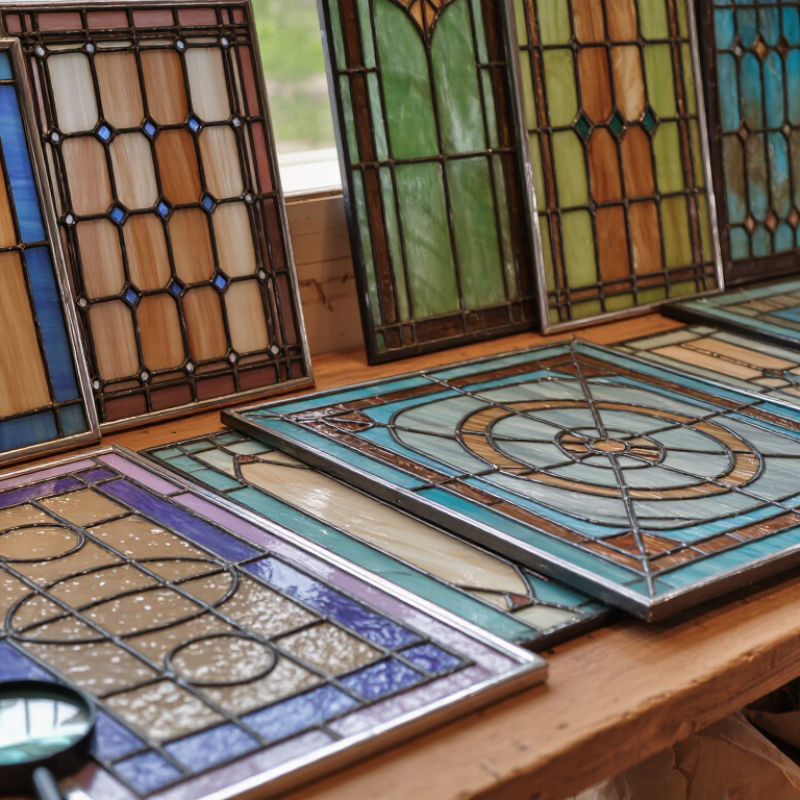
Define Antique Stained Glass and Identify Its Historical Value
How to Buy Antique Stained Glass Panels?
Antique stained glass is not simply old colored glass. It usually refers to panels made at least 100 years ago, although the term has no universal legal definition. Historical value depends on date, maker, location, design, condition, and documented ownership. A small church window with original lead lines may be more important than a larger decorative panel. Look closely at the glass texture. Hand-blown glass often shows tiny bubbles, uneven thickness, and gentle color shifts. Machine-perfect surfaces can suggest later production.
Research matters. The 2024 Art Basel and UBS Global Art Market Report valued worldwide art sales at about 65 billion US dollars in 2023. This figure covers many art categories, not stained glass specifically. Still, it shows why provenance and specialist verification influence buyer confidence. Conservation reports should identify cracks, replaced pieces, unstable lead, and previous repairs. I have seen attractive panels lose value after careless cleaning. The label is never perfect. Historical research can also change the story.
Tips: Ask for photographs under natural light, edge views, and close-ups of joints. Request written dimensions and repair details. Compare archival images, auction records, and local architectural histories. A qualified stained-glass conservator should inspect valuable work before payment. Avoid panels with vague dates or dramatic claims. Your own judgment needs evidence.
How to Buy Antique Stained Glass Panels? - Define Antique Stained Glass and Identify Its Historical Value
| Evaluation Dimension | Historical Period or Category | Typical Characteristics | Historical Value Indicators | Buyer Verification Points |
|---|---|---|---|---|
| Definition of antique | Generally more than 100 years old | Age alone does not prove authenticity; the panel should also show period-appropriate materials, construction, and wear. | Documented age, original architectural context, and confirmed provenance can substantially increase importance. | Request ownership records, restoration reports, photographs, or architectural documentation. Legal definitions may vary by jurisdiction. |
| Medieval stained glass | Approximately 1150–1500 | Small colored glass pieces joined with lead, hand-painted details, uneven surfaces, and strong religious or heraldic imagery. | Exceptional rarity, identifiable original location, intact painted detail, and secure provenance are especially significant. | Obtain specialist examination. Check for extensive replacement glass, modern solder, heavy overpainting, or assembled fragments. |
| Renaissance and early modern glass | Approximately 1500–1800 | More complex figurative scenes, heraldic panels, grisaille painting, enamel colors, and carefully designed borders. | A complete narrative scene, identifiable heraldry, period painting, and original architectural association add historical weight. | Compare heraldic symbols with historical references and inspect painted lines under magnification. |
| Victorian stained glass | 1837–1901 | Rich jewel colors, floral or religious motifs, painted faces, textured glass, and elaborate leaded compositions. | Originality, artistic quality, intact condition, documented building history, and well-preserved painted details are important. | Look for construction consistent with the period rather than relying only on a Victorian-style appearance. |
| Arts and Crafts glass | Approximately 1880–1920 | Nature-inspired forms, stylized geometry, visible handcraft, muted colors, and emphasis on material texture. | Strong design, original leadwork, coherent craftsmanship, and association with a significant building or interior raise importance. | Inspect whether the design is genuinely hand-crafted and whether later repairs have altered the original composition. |
| Art Nouveau glass | Approximately 1890–1914 | flowing botanical lines, asymmetrical compositions, insects, flowers, and curved forms inspired by nature. | A distinctive original design, excellent color harmony, and documented period installation can support higher historical significance. | Distinguish period work from later reproductions by examining glass texture, lead profile, paint, and provenance. |
| Art Deco glass | Approximately 1920–1939 | Geometric shapes, stepped patterns, sunbursts, streamlined forms, and contrasting colors. | Originality, rarity of the pattern, intact geometric layout, and connection to a period building or interior are relevant. | Check that the pattern, glass texture, and lead construction are consistent with the claimed date. |
| Glass type | Handmade or machine-produced glass | Handmade glass may show bubbles, striations, waviness, tonal variation, or irregular thickness; machine-made glass is usually more uniform. | Original period glass and unusual textures may contribute to authenticity and visual interest, but irregularity is not proof by itself. | View the panel in transmitted light and ask which pieces are original, replaced, or newly cut. |
| Construction technique | Leaded glass, painted glass, enamel, silver stain, or copper foil | Traditional lead came joins glass pieces; kiln-fired paint and stain create lines, shading, and yellow tones; copper foil is more associated with later craft techniques. | Technique should correspond with the claimed period and design tradition. | Ask an experienced conservator to assess lead profiles, solder joints, paint firing, and evidence of reassembly. |
| Condition | Excellent, stable, restored, or requiring conservation | Common issues include cracked glass, bowed panels, weakened lead, broken solder joints, missing pieces, corrosion, and poorly executed repairs. | Original surviving material is valuable, but stable professional restoration is generally preferable to unsafe deterioration. | Request detailed images of both sides and a written condition report before purchase. |
| Provenance | Ownership and installation history | Useful evidence may include dated photographs, architectural plans, inventory records, conservation files, exhibition records, or estate documentation. | A continuous, verifiable history can support authenticity and explain cultural significance. | Treat unsupported stories as unverified. Ensure the seller has the legal right to transfer the panel. |
| Original architectural context | Domestic, religious, civic, or commercial building | Panels may have been made for windows, doors, screens, transoms, memorials, or decorative interior partitions. | A known location, documented commission, or connection to a historically important building may increase cultural value. | Confirm dimensions, original function, removal history, and whether the panel was altered to fit a new frame. |
| Authenticity warning signs | Possible reproduction, composite, or heavily restored panel | Perfectly uniform glass, artificially aged lead, inconsistent soldering, modern backing, mismatched pieces, or vague dating claims may require further investigation. | A panel with unclear origins should not be valued as an authenticated antique until examined independently. | Use independent appraisal or conservation advice, especially for rare, expensive, or historically attributed pieces. |
| Safe purchase checklist | Before payment and delivery | Confirm measurements, weight, framing, glazing, packing, transport, insurance, return terms, and conservation needs. | A careful purchase process protects both the financial and historical value of the object. | Obtain a written invoice describing age, materials, condition, restoration, provenance, and any guarantees or exclusions. |
Note: Historical dates are approximate and styles often overlap. Age, appearance, and price cannot independently establish authenticity; provenance, technical examination, and condition assessment should be considered together.

