How to Choose Indoor Trampoline Park Suppliers?
Choosing reliable Indoor Trampoline Park Suppliers is a practical decision, not a simple price comparison. A supplier affects visitor safety, installation quality, maintenance costs, and the park’s long-term reputation. This guide explains how to assess suppliers before signing a contract. It focuses on evidence, technical ability, communication, and real operating experience.
Begin with the equipment itself. Ask for detailed drawings, material specifications, load ratings, padding thickness, and anchoring methods. Request documentation showing compliance with relevant local safety standards. Depending on the market, standards may include ASTM, EN, or other recognized requirements. Visit an operating park if possible. Watch how trampolines, foam pits, climbing walls, and protective nets perform after months of use. Small details matter. Loose stitching matters.
A professional supplier should provide installation guidance, staff training, inspection schedules, replacement parts, and emergency support. Speak with previous customers, not only the references selected by the supplier. Ask about delayed shipments, damaged components, warranty claims, and response times. Their answers may reveal more than a polished presentation. No supplier is perfect, and early assumptions can be wrong. A low quotation might exclude installation, testing, or future repairs. A famous supplier might still misunderstand your building, audience, or local regulations. Compare written evidence carefully, then choose a partner that communicates clearly and accepts responsibility throughout the project.
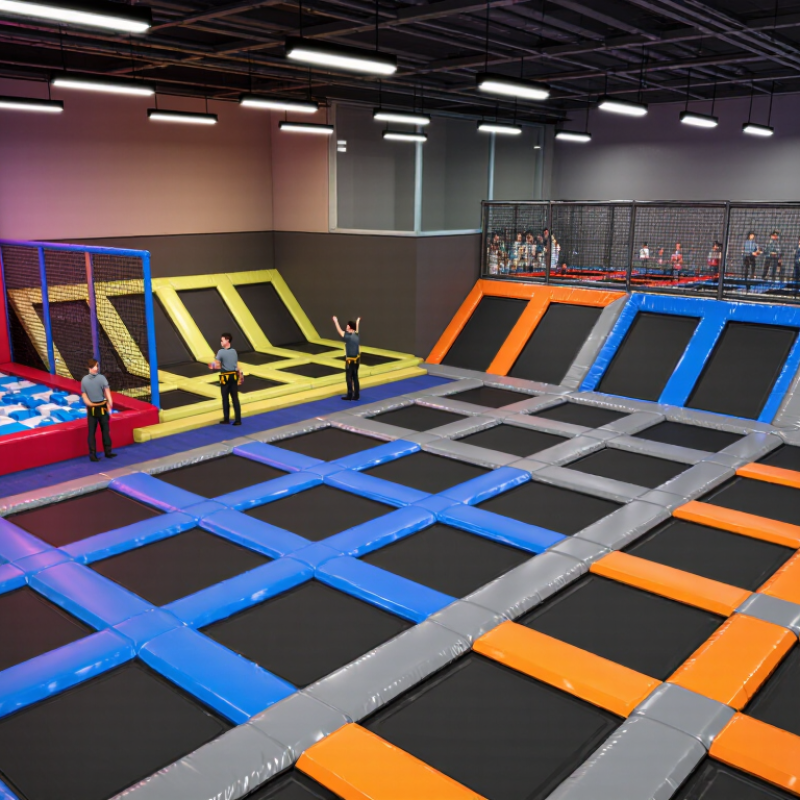
Define Your Indoor Trampoline Park’s Needs and Operating Goals
How to Choose Indoor Trampoline Park Suppliers?
Define Your Indoor Trampoline Park’s Needs and Operating Goals
Choosing an indoor trampoline park supplier starts with your operating plan, not a product catalog. Define your expected visitor numbers, age groups, peak hours, and available floor area. A 1,000-square-meter venue may need different equipment from a family center with several activity zones. Decide whether your goal is high visitor turnover, longer family stays, birthday bookings, or balanced daily use. These choices affect trampoline layouts, climbing features, seating, storage, and staff visibility.
Tips:
Draw a simple floor plan before contacting suppliers. Mark entrances, emergency routes, queues, spectator areas, and cleaning points. Ask suppliers for load ratings, material specifications, installation details, maintenance schedules, and inspection records. Reliable suppliers should explain how components can be replaced without closing the whole park. Request references from comparable projects, but verify their operating results independently.
Your budget should include delivery, installation, staff training, repairs, and future upgrades. A low purchase price can become expensive when spare parts are difficult to source. Plan for routine checks, especially around springs, padding, netting, anchors, and high-contact surfaces. Safety documentation matters, but practical supervision matters too. A perfect forecast is impossible. Leave flexible space for changing customer habits. Revisit your goals after the first operating season, because the busiest feature may not be the one you expected.
Evaluate Supplier Safety Standards, Certifications, and Product Quality
How to Choose Indoor Trampoline Park Suppliers?
Safety should be verified before price, design, or delivery speed. Ask suppliers which safety standards apply to each trampoline system. Request current test reports from independent laboratories, not only supplier declarations. Check whether reports cover the exact model, materials, and production batch. Certificates need clear issuing bodies, dates, and valid scopes.
During site inspections, I have seen attractive equipment hide weak stitching and uneven padding. Inspect frame welds, spring covers, jumping mats, net connections, and foam blocks closely. Press the padding by hand. It should recover evenly without exposed gaps. Ask for material specifications, fire performance data, load testing, and impact protection results. Confirm that anchoring plans match the building structure and floor conditions. Small details matter.
Supplier experience also needs practical proof. Request installation records, maintenance schedules, spare-parts support, and references from similar facilities. Speak with operators about repairs, response times, and recurring faults. A supplier should explain inspection intervals in plain language. Vague answers are warning signs. Still, documents can be incomplete, and my own checks may miss hidden defects. Independent engineering review is worth considering, especially for complex layouts. Walk through the proposed park as a child might, because unsafe reach points often appear at adult eye level.
Compare Trampoline Park Designs, Features, and Customization Options
When choosing indoor trampoline park suppliers, compare designs beyond colorful renderings. In site reviews, I examine visitor flow, ceiling clearance, emergency exits, and staff sightlines. A strong layout separates high-energy jumping from quieter activities and waiting areas.
Measure twice.
Ask suppliers for detailed drawings with dimensions, material specifications, and installation tolerances. Check frame padding, spring protection, net strength, and impact-absorbing flooring. Request test reports, maintenance schedules, and documented inspection procedures. Reliable suppliers explain how their equipment performs after repeated daily use, not only on opening day.
Customization should support your space and operating model. Options may include angled trampolines, foam pits, climbing walls, dodgeball courts, interactive games, and themed obstacles. Confirm how each feature affects supervision, cleaning, replacement costs, and future expansion.
A custom obstacle may look exciting but create hidden maintenance problems. I have seen attractive layouts lose usable floor space because circulation was underestimated. Suppliers should revise plans after reviewing your measured site, expected visitor ages, staffing levels, and peak-hour capacity.
Ask for accessible routes and clear evacuation paths. These details often receive less attention than visual design, yet they shape daily safety and customer experience. A supplier who welcomes difficult questions is usually easier to trust.
Review Installation Services, Warranties, Training, and Maintenance Support
Choosing an indoor trampoline park supplier involves more than comparing equipment prices. Installation support can determine whether the opening stays on schedule. Ask who prepares the floor plan, checks ceiling clearance, and supervises anchoring. Experienced teams should provide clear drawings, delivery schedules, and on-site inspection records. Small details matter, such as padded edges, access routes, and correct spacing between attractions.
Training should cover more than a brief handover. Staff need practical instruction on daily inspections, emergency procedures, cleaning routines, and guest supervision. Request training materials that new employees can understand quickly. A short video helps, but hands-on practice is better. It should include realistic situations, such as a loose pad or a crowded landing zone. Some suppliers promise extensive training but provide little documentation. That gap deserves attention.
Review the warranty line by line. Confirm coverage periods, excluded parts, response times, and labor responsibilities. A long warranty is not useful if replacement components take months to arrive. Maintenance support should include inspection schedules, spare-part access, troubleshooting guidance, and remote assistance. Ask how worn springs, nets, padding, and fasteners are assessed. Keep service records with dates, photographs, and corrective actions. No checklist is perfect. Operators should still question unusual wear and revise routines after real use. A supplier’s reliability appears in the support provided after installation, not only in polished sales materials.
Assess Supplier Costs, Delivery Plans, Reputation, and Long-Term Value
How to Choose Indoor Trampoline Park Suppliers?
Supplier price is only the visible part of your investment. Grand View Research valued the global trampoline park market at about USD 1.4 billion in 2022. It also projected a 16.2% compound annual growth rate through 2030. Fast growth can hide rushed manufacturing and inflated quotations. Request a landed-cost sheet covering equipment, packaging, installation, spare parts, taxes, and staff training. A cheaper quote may become expensive after one damaged shipment.
Delivery planning needs measurable checkpoints. Ask for drawings, material approval, factory inspection, loading photos, and tracking documents. Confirm production time in writing. Also check how the supplier handles missing components. A realistic plan includes customs delays and replacement-part delivery. It should not rely on optimistic promises. In my view, a two-week delay is manageable; unclear communication is harder to repair.
Reputation requires evidence, not polished testimonials. Request references from parks with similar capacity and operating hours. Review inspection records, maintenance guidance, insurance documents, and compliance with relevant standards, such as ASTM F2970 for trampoline courts. The 2024 Global Economic Impact Study from IAAPA and Oxford Economics reported that attractions supported 24.5 million jobs worldwide, showing the sector’s operational scale. Long-term value depends on uptime, surface durability, warranty response, and training. Ask for expected replacement cycles. I would also visit an operating site, if possible. Photos can mislead. A small design mistake may become a daily maintenance problem.