
7 Tips for Choosing a Theater Seating Manufacturer

Choosing a Theater Seating Manufacturer is not simply a matter of comparing prices or selecting an attractive fabric. The seats must suit the room, audience, and daily demands of the venue. A chair can look comfortable in a catalog but feel different after a full performance. Details matter: seat pitch, aisle access, armrest shape, upholstery, and how smoothly a tip-up seat moves.

A careful selection starts with clear questions. Can the manufacturer provide product specifications, material options, and samples? Are the seats tested for durability, and can the supplier explain the results? Ask how delivery, installation, replacement parts, and warranty support are handled. These practical details are easy to overlook. They can also affect a project long after the first rows are installed.

This guide shares seven tips for evaluating manufacturers, from checking relevant experience to reviewing customization and after-sales service. Compare proposals against the same requirements, and request references for projects with similar seating needs. If possible, inspect a finished installation or test a sample seat in person. A polished brochure is useful, but it is not proof of long-term performance. And no supplier is perfect. Look for clear answers, realistic timelines, and a willingness to discuss limitations, not just promises.
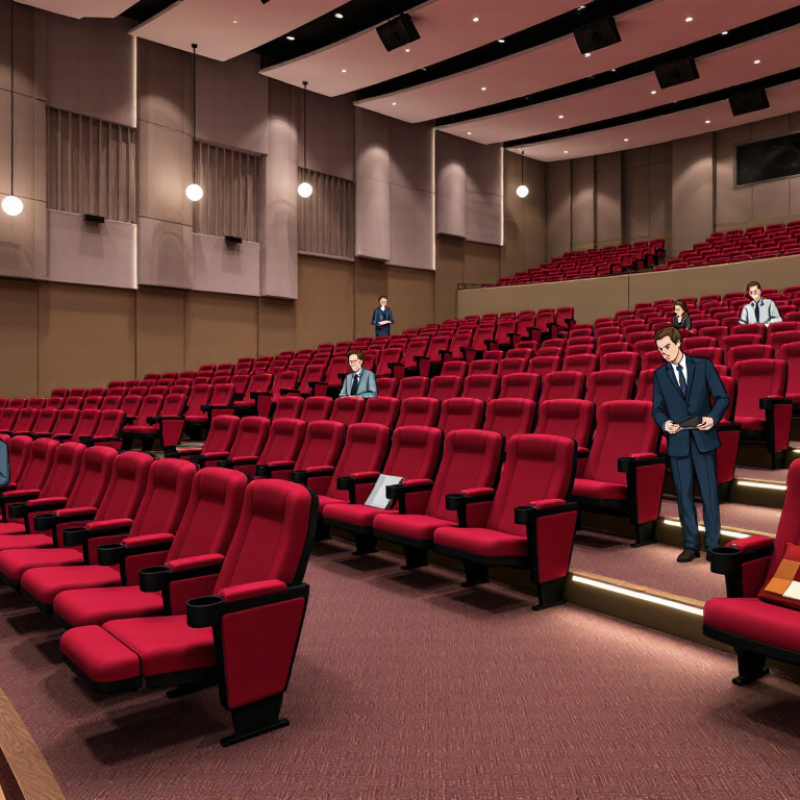
7 Tips for Choosing a Theater Seating Manufacturer

Identify Your Theater’s Seating Requirements

Before requesting quotes, map the room and describe how it will be used. Measure the stage-to-back-wall depth, aisle widths, door locations, and any floor slopes. Count usable seats only after allowing space for circulation and accessible seating. Start with the room, not a catalog. A paper plan can reveal a tight aisle before it becomes an expensive installation problem.

Consider who will use the theater and how often. A school auditorium may need durable, easy-to-clean upholstery and seats that withstand daily use. A small performance venue may prioritize clear sightlines, comfortable legroom, and quiet seat movement. Check the seat width, back height, row spacing, and armrest design against the intended audience. Small details matter. A few extra inches can change both comfort and total capacity.

Also define maintenance needs before choosing a seating manufacturer. Ask who will clean the seats, how often they will be used, and whether staff need access to replace parts. Request material samples and compare them under the room’s lighting; colors can look different on a screen. Plans change. I have seen early seat counts feel certain, then shift after a projector, wheelchair space, or wider aisle is added. Keep a little flexibility in the layout, and share actual measurements rather than estimates.

Evaluate the Manufacturer’s Experience and Production Capabilities

Years in business matter, but comparable projects matter more. Ask for references from venues with similar seat counts, layouts, and installation schedules. Inspect completed work, not only showroom samples. Look closely at welded joints, upholstery seams, armrest alignment, and finish consistency. Those details reveal process discipline.

Production capacity should be verified on the factory floor. Request a walk-through showing cutting, frame assembly, upholstery, testing, and packing. Ask how peak orders are scheduled and how defects are logged and corrected. A 2024 Deloitte–Manufacturing Institute report estimates that U.S. manufacturers will need 3.8 million workers by 2033. It warns that 1.9 million roles could remain unfilled. This makes staffing depth and cross-training worth checking, not assuming.

Tip: Ask the manufacturer to trace one seat from material receipt to final inspection. Compare its checklist with your specifications, including load, finish, and replacement-part requirements. A polished tour can still hide bottlenecks. No checklist catches everything; a pilot order may expose a mismatch before the full run.

7 Tips for Choosing a Theater Seating Manufacturer - Evaluate the Manufacturer’s Experience and Production Capabilities

Evaluation Area Evidence to Request Positive Indicators Points to Verify
Relevant project experience A portfolio of completed auditoriums, cinemas, performing arts venues, or other comparable installations. Examples show seating layouts and project requirements similar to yours, such as fixed rows, aisle access, or retractable seating. Confirm the manufacturer’s role, project scope, and whether the examples are comparable in size and use.
Production capacity An outline of production stages, available equipment, workforce planning, and capacity for the requested quantity. The supplier explains how orders are scheduled and how production progress and quality are monitored. Check whether the stated lead time accounts for approvals, materials, production, packing, and shipping.
Customization capability Drawings or specifications covering dimensions, upholstery, finishes, accessories, and layout options. The manufacturer can document which features are standard, optional, or custom and explain how changes affect cost and schedule. Ask how proposed designs will be checked against room dimensions, sightlines, aisles, and applicable project requirements.
Quality control A description of incoming-material checks, in-process inspections, final inspection, and defect handling. Inspection steps and acceptance criteria are recorded and can be shared before an order is placed. Clarify how nonconforming products are corrected and who approves any changes to agreed specifications.
Materials and durability Material specifications, care instructions, warranty terms, and relevant test reports where available. The supplier identifies the materials used in key components and provides clear guidance on maintenance and replacement parts. Verify that any fire, safety, or performance claims apply to the exact material and product configuration offered.
Installation and logistics Packing details, delivery schedule, installation responsibilities, and site-readiness requirements. Responsibilities for transport, unloading, installation, and handover are clearly assigned in writing. Confirm access routes, storage needs, installation sequence, and how delays or damaged goods will be handled.
After-sales support Written warranty conditions, service contact process, spare-parts availability, and response procedures. Support coverage, exclusions, claim steps, and availability of common replacement parts are explained before purchase. Check warranty duration and coverage in the contract; ask whether service or parts costs are included or charged separately.

Compare Seating Designs, Materials, and Customization Options

Compare seating designs in a full-scale mock-up, not just a brochure. Check sightlines from the back row, aisle clearance, seat pitch, and whether folded seats block circulation. A curved back may suit a historic auditorium, while a compact tip-up design can preserve narrow aisles. Test it in person. Ask the manufacturer for dimensioned drawings and a sample row before approving a layout.

Materials shape comfort, maintenance, and replacement costs. Compare upholstery abrasion results, stain-cleaning instructions, foam specifications, and the finish on exposed metal or wood. Ask for test methods, not just “heavy-duty” claims. Custom options may include upholstery colors, arm caps, row lettering, cup holders, and removable seat parts. More options are not always better; each can add cost or complicate repairs. The U.S. EPA’s 2018 Advancing Sustainable Materials Management report estimated 12.1 million tons of furniture and furnishings were generated as municipal solid waste in the United States. That is not theater-seat data, but it supports asking whether worn parts can be replaced instead of discarding whole seats. UNEP’s 2023 Global Status Report for Buildings and Construction attributed 37% of global energy- and process-related CO2 emissions to buildings and construction. Treat material durability as one procurement factor, not a complete sustainability measure.

7 Tips for Choosing a Theater Seating Manufacturer

Compare seating designs, materials, and customization options alongside comfort, durability, accessibility, and installation support.

How to use this chart: These illustrative 1–5 ratings are a sample planning framework, not survey results or ratings of specific manufacturers. Adjust the priorities for your venue, then compare suppliers using documented specifications, samples, warranties, and project references.

Check Safety Standards, Accessibility, and Quality Certifications

Tip: Ask the manufacturer which safety standards apply to your venue and seating type. Requirements can vary by location and project, so request the relevant test reports, not just a general claim of compliance. Check whether reports cover the exact seat model, frame, and installation method. A sturdy-looking sample is not proof.

Tip: Review accessibility in the seating plan, not only in a product brochure. Confirm wheelchair spaces, companion seats, clear routes, and sightlines from different areas of the auditorium. Ask how these spaces work when the room is full. A layout can look generous on paper and feel cramped once people, bags, and equipment arrive.

Tip: Check quality certifications carefully. Verify who issued each certificate, what it covers, and whether it is current. Ask for production checks, material details, and warranty terms in writing. If an answer is vague, request a specific document. One detail is easy to miss: a certificate may apply to a factory process, not the seats themselves. I would not treat paperwork as a substitute for inspecting a sample and discussing installation limits. Manufacturers can provide useful evidence, but your project team should confirm that it fits the venue.

Review Pricing, Delivery, Warranty, and After-Sales Support

A low quote can hide freight, anchoring hardware, installation, or replacement-part costs. Ask for an itemized price and a written validity period. The U.S. Bureau of Labor Statistics reported that average consumer prices rose 4.1% in 2023; this is not a theater-seat price index, but it shows why old quotes may become unreliable. Compare like with like, including fabric grade, fire-performance documentation, and the number of seats covered. Details matter.

Delivery promises should name production time, shipping method, and what happens if a shipment arrives short or damaged. Ask for a phased delivery schedule that matches the venue’s installation plan. Get it in writing. A vague “eight weeks” can mean factory completion, not arrival at your loading dock. I would still leave a small buffer; schedules slip, and nobody enjoys explaining missing aisle seats on opening week.

Read the warranty for duration, exclusions, labor coverage, and who pays freight for replacement parts. Confirm whether normal wear, upholstery, moving components, and installation defects are treated differently. For after-sales support, ask how to report faults, expected response times, and whether common parts can be supplied separately. Request a sample service record or reference from a comparable venue, with permission. If the answers are only verbal, that is a warning sign. A clear contact route and documented claim process matter as much as the warranty headline.

Call Now