What is Fiberboard Medium Density Board and Its Benefits?
Fiberboard Medium Density Board (MDF) has emerged as a popular material in modern construction and furniture manufacturing. It is created from wood fibers, wax, and resin, offering a versatile alternative to solid wood. According to the latest industry report by MarketsandMarkets, the global MDF market is expected to reach $24 billion by 2025, driven by its lightweight nature and affordability.
MDF stands out due to its smooth surface, making it suitable for intricate designs. It can be easily cut and shaped, allowing for greater creativity in various applications. Furthermore, the material exhibits excellent stability, reducing the chances of warping. However, it’s essential to note that while MDF is durable, it can be susceptible to moisture damage.
Using Fiberboard Medium Density Board can lead to significant cost savings without compromising quality. Its environmental impact is also noteworthy, as many manufacturers now produce MDF from recycled wood products. This aligns with growing consumer demand for sustainable materials. Nonetheless, potential buyers should research manufacturers to ensure they meet eco-friendly standards and industry regulations.
Definition of Fiberboard Medium Density Board
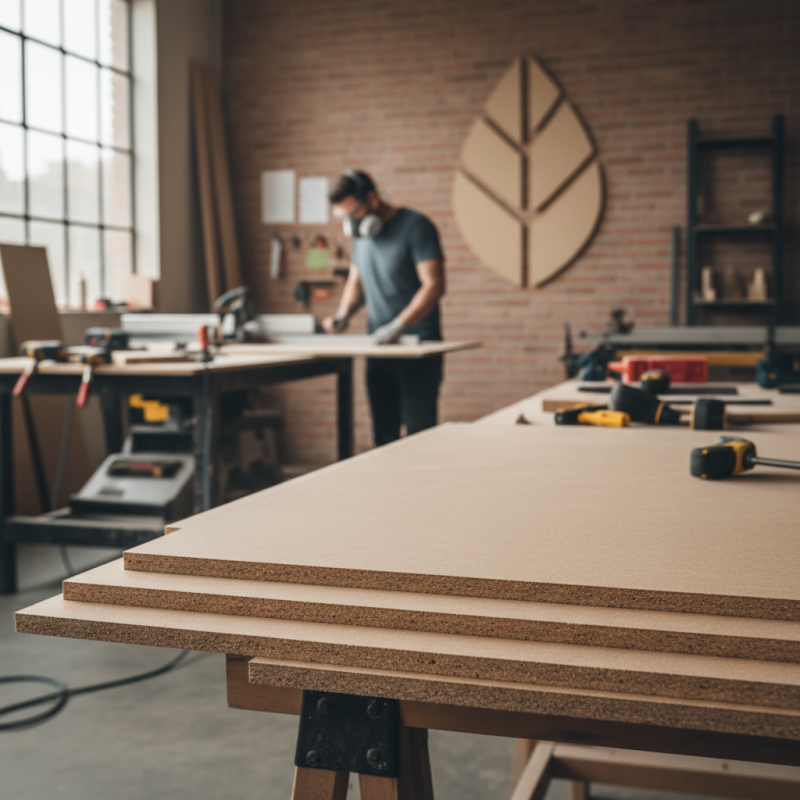
Fiberboard Medium Density Board, often simply referred to as MDF, is a versatile building material. It is made from wood fibers, wax, and resin, which are compressed under heat and pressure. This process creates a dense and durable board free of knots and splits. MDF has a smooth surface, making it ideal for a variety of applications, from furniture to decorative projects.
One of the standout features of MDF is its uniform density. Unlike solid wood, it does not warp, crack, or shrink easily. This aspect allows for consistent cuts and finishes, essential when crafting custom pieces. Its smooth surface is perfect for painting and veneering, allowing for beautiful finishes. However, it’s important to note that MDF can absorb moisture, so proper sealing is necessary in humid environments.
MDF is also known for its cost-effectiveness compared to solid wood. It often provides a more economical solution for large projects. Yet, one must consider the environmental impact of MDF production. The use of resin can release formaldehyde, a compound that may cause health concerns during preparation.
Ventilation and protective gear during use can mitigate these risks. Overall, while MDF offers many benefits, it requires careful handling to maximize its potential while minimizing drawbacks.
Manufacturing Process of Medium Density Fiberboard
The manufacturing process of Medium Density Fiberboard (MDF) involves several key stages that ensure high quality and durability. It begins with the selection of wood fibers, typically sourced from wood chips and sawmill residues. These fibers undergo mechanical and chemical treatment to break them down. During this stage, various additives may be included to enhance the board’s properties.
Once the fibers are prepared, they are mixed with adhesive resin. This mixture is then formed into mats, which are subjected to heat and pressure in hydraulic presses. The heat activates the resin, bonding the fibers together and creating a dense, uniform board. The pressing process requires precise control. Too much pressure can lead to a loss of structural integrity. Not enough pressure may produce weak boards.
Cooling comes next, followed by trimming and sanding to achieve the desired dimensions and smooth surface finish. It’s essential to watch for inconsistencies during this stage. Quality control is critical in ensuring the final product meets standards. Each step in this process impacts the performance and aesthetics of the MDF, highlighting the importance of skilled craftsmanship and continuous improvement in manufacturing practices.
What is Fiberboard Medium Density Board and Its Benefits? - Manufacturing Process of Medium Density Fiberboard
| Dimension | Value | Benefits | Manufacturing Process |
| Density | 600-800 kg/m³ | Good strength and load-bearing capacity | Wood fibers bonded using adhesives and heat |
| Thickness | 3-50 mm | Versatile for various applications | Formed into sheets under pressure |
| Moisture Resistance | Low | Ideal for indoor applications | Cured to bond fibers, enhancing stability |
| Surface Finish | Smooth or textured | Aesthetic appeal for furniture and cabinets | Coated or laminated for durability |
| Environmental Impact | Recyclable | Sustainable material choice | Produced from wood waste and by-products |
Key Benefits of Using Medium Density Fiberboard
Medium Density Fiberboard (MDF) is a popular material in furniture and cabinetry. Its density provides stability and strength, making it an ideal choice for various applications. One key benefit of using MDF is its smooth surface, which is excellent for painting and veneering. You can achieve a high-quality finish without surface imperfections.
Another advantage of MDF is its ability to be easily shaped and cut. This feature allows for intricate designs and custom fabrication. Whether you are crafting shelves or decorative items, MDF can meet your design needs. It’s worth noting, however, that while MDF is versatile, it is prone to water damage if not properly sealed.
Tip: Always use a sealant to protect MDF from moisture. This simple step will significantly extend its lifespan.
In terms of environmental impact, many types of MDF are made from recycled wood fibers. This makes it a more sustainable option compared to solid wood products. However, be wary of the adhesives used in the manufacturing process, as some may contain formaldehyde.
Tip: Opt for MDF labeled as low-emission to ensure a safer indoor environment.
The benefits of MDF are evident, but decisions should depend on your specific project requirements. Always consider durability and environmental factors when selecting materials.
Applications of Medium Density Fiberboard in Industries
Medium Density Fiberboard (MDF) is widely used across various industries. Its versatility makes it a popular material for furniture, cabinetry, and flooring. MDF is made from wood fibers and resin, providing a smooth surface ideal for painting and veneering. This characteristic allows designers to create aesthetically pleasing products that meet consumer demands.
In construction, MDF is frequently used for decorative moldings and fixtures. Its ability to be easily cut and shaped aids in precision work. The material is also durable, resisting warping and cracking, which is crucial for long-lasting applications. However, the production process releases fine dust, which can pose health challenges if proper safety measures are not followed.
MDF's affordability is another reason for its widespread use. Many businesses rely on this material to keep costs down while maintaining quality. Yet, some industries are reconsidering its use due to environmental concerns. The process of creating MDF can impact ecosystems. Ensuring sustainable practices may require more effort but is necessary for future viability.
Comparing Medium Density Fiberboard with Other Wood Products
Medium Density Fiberboard (MDF) stands out among various wood products due to its unique composition and versatility. Unlike solid wood or plywood, MDF is made from wood fibers bonded together, resulting in a smooth and dense surface. This uniform texture allows for precise cutting, shaping, and sanding. Carpenters and furniture makers often prefer MDF for intricate designs and finishes. However, despite its merits, MDF may not offer the same structural strength as solid wood, leading to potential concerns in high-stress applications.
When comparing MDF to particle board and plywood, some differences become evident. Particle board is typically cheaper, but it lacks the durability and water resistance that MDF possesses. On the other hand, plywood offers superior strength due to its layered structure. This makes plywood a better choice for heavy-duty projects. Yet, MDF remains a favorite for cabinetry, cabinetry, and decorative applications. It provides a level of aesthetic appeal that is hard to match.
While MDF can warp in humid conditions, it generally remains easier to work with than its counterparts. Potential buyers should weigh the pros and cons before making a decision. Properties like moisture resistance, cost, and intended use should all be considered. This ensures the right choice is made for any project or application.
Comparison of Medium Density Fiberboard (MDF) and Other Wood Products
This chart illustrates the cost per square foot of various wood products, highlighting the affordability of Medium Density Fiberboard (MDF) compared to Plywood, Particle Board, and Solid Wood. MDF proves to be a cost-effective option while offering unique benefits in applications such as cabinetry, furniture making, and interior design.