
10 Tips for Choosing the Best Automatic Blinds
Choosing the right automatic blinds involves more than matching fabric to wall color. It affects daylight, privacy, energy use, comfort, and daily convenience. A beautiful blind can still disappoint if its motor is noisy, its controls are confusing, or its measurements are slightly wrong. That last detail matters. A few millimeters can change the final fit.
Window-covering consultant Deb Barrett offers a useful reminder: “The best window treatments are the ones that work beautifully in real life.” Her point suits automatic blinds perfectly. Smart features should support ordinary routines, not create another complicated device. Morning schedules, glare reduction, child safety, battery access, and reliable operation deserve careful attention. So does the room itself. A bedroom may need quiet movement and blackout fabric, while a sunny office may need glare control without losing natural light.
This guide introduces ten practical tips for comparing automatic blinds with greater confidence. It considers motor quality, control options, fabric performance, installation, maintenance, and compatibility with existing smart-home systems. Real homes are rarely perfect. Windows may be uneven. Wi-Fi may be unreliable. Budgets can change halfway through a project. These problems are easy to overlook when product photos look polished.
Check the details.
A thoughtful choice begins with honest priorities. Convenience sounds simple, but the best system depends on how people actually live. Some recommendations may seem obvious. Others require a second look. That is useful, because automatic blinds should be judged by daily performance, not promises printed on a box.
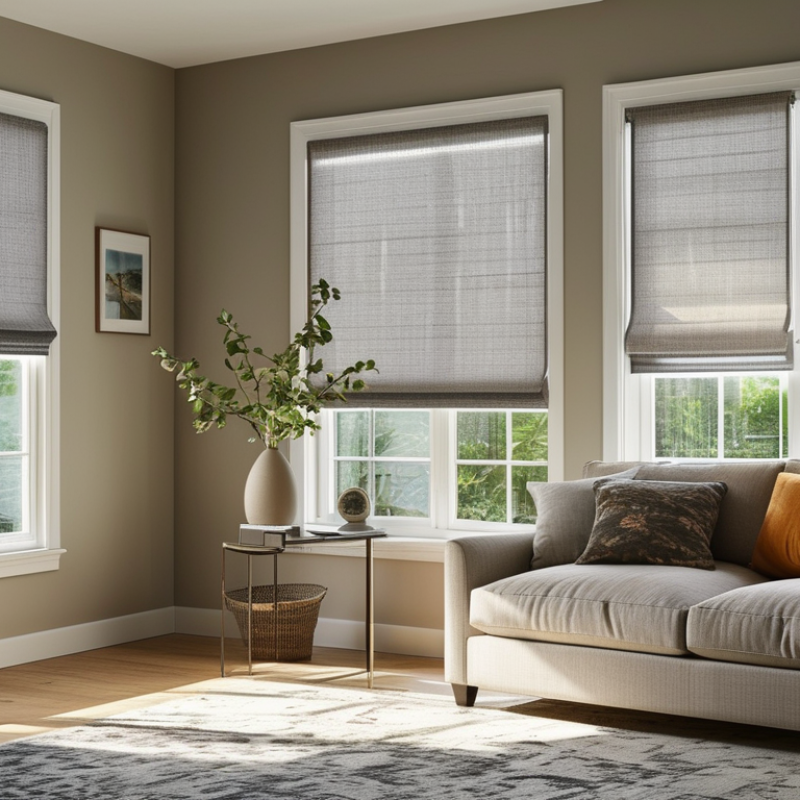
Classify Automatic Blind Types Under ANSI/WCMA A100.1-2022 Standards
Choosing automatic blinds starts with classification, not appearance. ANSI/WCMA A100.1-2022 focuses on safety risks from operating cords and inner cords in window coverings. It is not a motor-speed or smart-home performance standard. That distinction matters.
Classify the blind by its control system and cord exposure. A fully motorized blind has no user-operated lift cord, while a battery-powered blind may still include accessible cords. A hardwired model needs careful installation, but wiring does not replace cord-safety evaluation. Cordless designs generally reduce strangulation hazards. Continuous-loop cords require suitable safety devices and correct mounting. Check for accessible inner cords, especially near children’s beds, sofas, and play areas. Keep it practical.
Use these ten checks when comparing products: identify every cord, confirm the control’s reach, inspect cord tension, review mounting height, ask for compliance documentation, verify installation instructions, test battery access, check emergency operation, examine cleaning access, and confirm the product’s intended location. A label alone is not enough. Ask whether testing covered the complete assembled blind, not only one component. That detail is often missed.
I would also compare the blind’s fail-safe behavior. Does it stop when resistance is detected? Can it be opened during a power outage? These questions support safer daily use, although they are not substitutes for A100.1-2022 requirements. Standards evolve, and product literature can lag behind them. Verify the current edition and local installation rules before purchase. Confidence should come from evidence, not polished photographs.
10 Tips for Choosing the Best Automatic Blinds - Classify Automatic Blind Types Under ANSI/WCMA A100.1-2022 Standards
| Tip | Automatic Blind Type or Configuration | Typical Operating Method | Best-Suited Application | ANSI/WCMA A100.1-2022 Safety Consideration | Selection Check |
|---|---|---|---|---|---|
| 1 | Motorized Roller Blind | Tubular motor controlled by wall switch, remote, timer, or compatible control system. | Bedrooms, living rooms, offices, and standard rectangular windows. | A motorized operating system can reduce accessible operating cords, but the complete product must be evaluated for accessible cords, chains, loops, and other hazardous components. | Confirm the product has documented testing or compliance information for the applicable version of ANSI/WCMA A100.1-2022. |
| 2 | Motorized Cellular Shade | Battery-powered or wired motor with remote, switch, or scheduled control. | Bedrooms and rooms requiring insulation, light filtering, or blackout performance. | Cordless operation is preferred where children or pets are present; verify that no accessible inner or operating cords are created by the design or installation. | Compare cell structure, blackout capability, battery access, charging frequency, and installation clearances. |
| 3 | Motorized Roman Shade | Motorized lift system operated by remote control, switch, or automation schedule. | Decorative interiors, bedrooms, dining areas, and larger fabric-covered windows. | Roman shades may contain internal lift cords; ensure the construction and accessible components have been evaluated under the applicable safety requirements. | Inspect the shade when fully raised and lowered, and check that fabric folds do not expose accessible cords or loops. |
| 4 | Motorized Venetian or Horizontal Blind | Motorized tilt and lift functions controlled electronically. | Kitchens, offices, and rooms needing adjustable daylight and privacy. | Check both the tilt and lift mechanisms for accessible cords, chains, loops, or openings that may create a strangulation hazard. | Choose a system with independent tilt and lift control if precise glare and privacy management are important. |
| 5 | Motorized Vertical Blind | Motorized traverse, vane rotation, or both. | Sliding glass doors, patio doors, and wide windows. | Eliminate or secure accessible chain and cord loops, and confirm that the motorized track does not introduce an exposed operating loop. | Measure the opening width, stacking space, door clearance, and required travel direction before ordering. |
| 6 | Motorized Skylight or Specialty Shade | Motorized roller, cellular, or pleated shade operated by remote or automated control. | Roof windows, angled windows, hard-to-reach openings, and high ceilings. | The product should not require a hanging operating cord in an accessible area; verify safe installation and control placement. | Check slope compatibility, heat exposure, moisture resistance, emergency access, and motor load capacity. |
| 7 | Battery-Powered Automatic Blind | Replaceable or rechargeable batteries supply a low-voltage motor. | Existing homes and rental properties where concealed wiring is impractical. | Cordless operation may improve safety, but battery compartments, charging leads, and any manual override must remain inaccessible to young children where applicable. | Review expected battery life, charging method, low-battery behavior, and access for maintenance. |
| 8 | Hardwired Automatic Blind | Low-voltage or line-voltage wiring connected to a wall control or automation system. | New construction, commercial spaces, and multi-window installations. | Hardwiring does not by itself establish window-covering safety compliance; accessible cords, loops, and product-specific hazards still require evaluation. | Use qualified electrical installation where required and verify power-loss, manual override, and service-access behavior. |
| 9 | Smart-Integrated Automatic Blind | Remote, app, voice, sensor, timer, or home-automation control. | Whole-home daylight control, energy management, accessibility, and scheduled privacy. | Smart connectivity is not a substitute for physical safety compliance; assess the blind itself, including cords, loops, inner cords, and installation height. | Confirm local control remains available during internet or power interruptions and review privacy and access permissions. |
| 10 | Child- and Pet-Conscious Cordless Configuration | Motorized operation with no user-accessible operating cord or loop. | Nurseries, children's rooms, childcare areas, and homes with pets. | Prioritize designs that minimize accessible cords and loops, then verify the complete product and installation against ANSI/WCMA A100.1-2022 requirements. | Keep furniture, beds, and climbing aids away from the window covering and follow the installation and warning-label instructions. |
Important classification note: ANSI/WCMA A100.1-2022 is a voluntary safety standard for window covering products and does not rank automatic blinds by quality, price, or performance. The configurations above are practical product categories, not official ANSI product classifications. Always request current compliance documentation for the complete blind, operating system, and installation.
Related Posts
-
2026 Best Motorized Window Shades for Your Home Decor?
-
2026 Top Trends in Motorized Shades for Home Automation
-
Transform Your Cooking Space: The Ultimate Guide to Choosing Kitchen Blinds
-
The Benefits of Blackout Blinds for Better Sleep and Home Comfort?
-
Enhancing Home Efficiency: The Rise of Automatic Blinds for Windows in Energy Savings
-
Top 10 Automatic Blinds for Windows to Enhance Your Home Decor

