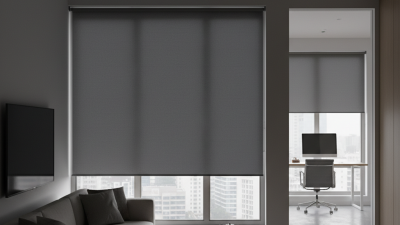
Choosing China’s top kitchen blinds manufacturers requires more than comparing catalogues and factory prices. Global buyers must examine fabric performance, moisture resistance, child-safety design, production consistency, and export documentation. A blind beside a sink faces steam, splashes, grease, and repeated cleaning every day.
Industry data supports this growing opportunity. Grand View Research reports continued expansion in the global window coverings market, driven by renovation, energy efficiency, and smart-home demand. Mordor Intelligence also identifies customization and motorized products as important growth areas within the blinds and shades sector. These findings suggest that kitchen blinds are no longer simple decorative products. They are becoming functional components of modern residential design.
As window-covering specialist Helen Shaw has stated, “Kitchens need window treatments that balance style, practicality, and easy maintenance.” That principle should guide supplier evaluation. Buyers should request fabric samples, test operating hardware, and confirm moisture-related specifications before placing large orders. A polished showroom is not enough. Factory audits, sample approvals, inspection records, and communication speed reveal more.
China offers extensive manufacturing capacity, competitive pricing, and flexible customization. Yet quality can vary sharply between suppliers. Some factories still prioritize appearance over long-term performance. That weakness deserves attention. This guide will examine leading Chinese kitchen blinds manufacturers through product range, material expertise, certifications, customization capability, minimum order quantities, and international service. The aim is practical rather than promotional: helping global buyers select dependable partners for real kitchens, not merely attractive photographs.
Kitchen blinds are window coverings designed for heat, moisture, splashes, and daily cooking mess. They control sunlight, protect cabinets, and improve privacy near sinks or street-facing windows. Common options include moisture-resistant roller blinds, faux-wood blinds, aluminum Venetian blinds, and washable fabric shades. The right choice depends on ventilation, window position, and cleaning habits. A blind beside a stove needs safer clearance and stable materials. Small details matter.
Global buyers need kitchen blinds because residential projects face different climates, building styles, and safety expectations. A reliable manufacturer should provide tested materials, consistent dimensions, color samples, clear installation instructions, and traceable quality checks. Ask about coating performance, cord safety, mildew resistance, and packaging protection before placing a bulk order. Experienced buyers also request sample units. Samples reveal uneven slats, weak brackets, or inaccurate colors that photos hide. Compliance documents should match the destination market. Still, paperwork alone cannot prove long-term performance. Practical testing remains necessary.
Tips: Measure the window recess at three points. Record the smallest measurement when required. Keep blinds away from heat sources. Choose smooth, wipe-clean surfaces for busy kitchens. Confirm moisture resistance instead of assuming it. Discuss lead times, replacement parts, and inspection standards in writing. After-sales support is often overlooked. A damaged blind is difficult to use when replacement parts are unavailable. Buyers should compare total cost, not only factory price. That lesson is easy to miss.
The chart compares practical selection priorities on a five-point scale. Moisture resistance and easy cleaning are especially important in kitchens because blinds are exposed to steam, grease, and frequent temperature changes. Light control, durability, and installation flexibility also help global buyers match products to different residential and commercial requirements.
China Top Kitchen Blinds Manufacturers for Global Buyers
Roller blinds suit compact kitchens with smooth walls and limited counter space. Choose moisture-resistant polyester or coated fabric, not ordinary cotton. Its flat surface collects less dust and wipes clean quickly. Keep the blind above the sink when possible. Steam still finds its way upward.
For busy cooking areas, aluminum Venetian blinds offer adjustable light and airflow. Their narrow slats work well near windows beside hobs, but grease can settle between them. Faux-wood blinds handle humidity better than natural wood. They suit traditional kitchens, although their thicker slats may reduce daylight. Cellular blinds provide stronger insulation near large windows. The U.S. Department of Energy estimates that windows can account for 25–30% of household heating and cooling energy use. Better coverage can therefore support comfort, but it cannot replace proper glazing.
Open-plan kitchens need wider roller blinds or vertical systems for broad glass doors. Select washable surfaces and child-safe operating controls. ASHRAE Standard 62.2-2022 lists 100 cubic feet per minute for intermittent kitchen exhaust, or 25 cubic feet per minute continuously. Ventilation matters more than blind material alone. A powerful hood reduces lingering moisture, but it will not prevent every oil mark. That is where specifications can fail. I would request fabric samples, test cleaning methods, and check the window recess before ordering. Availability and installation skill also vary among exporting manufacturers.
Evaluating China’s kitchen blind manufacturers requires more than viewing attractive catalogues. Request a sample with the exact fabric, slat size, coating, cord system, and mounting hardware. Test the blind beside a sink, where steam, grease, and repeated wiping expose weak finishes quickly. Ask for batch records, incoming-material checks, and a written tolerance sheet. A factory should explain its inspection process, not simply promise “high quality.” According to China’s General Administration of Customs, China exported RMB 23.77 trillion in goods in 2023. Large export capacity helps, but it does not prove one manufacturer understands kitchen environments.
Check production evidence through a video audit or independent inspection. Review equipment maintenance, worker training, packaging tests, and how nonconforming products are isolated. The World Bank’s 2023 Logistics Performance Index gave China a score of 3.7 out of 5, indicating strong logistics capability, yet delivery performance still varies by factory and region. Ask for recent lead-time records, not estimates. Confirm material declarations, fire-performance documents, and child-safety testing for the destination market. ISO 9001 certification can support process discipline, but certification alone is not product evidence. I have seen impressive samples fail after repeated cleaning. That uncomfortable detail matters. Also compare replacement-part availability, carton strength, and response times during a trial order. A low unit price may conceal fragile brackets, inconsistent colors, or costly rework. Evaluate those risks before signing.
China Top Kitchen Blinds Manufacturers for Global Buyers?
Kitchen blinds face steam, grease, sunlight, and frequent handling. Buyers should request test samples after humidity exposure, not only fresh factory samples. Check fabric shrinkage, colorfastness, coating adhesion, and slat movement. For kitchens, moisture-resistant materials matter more than attractive catalog photography.
Cord safety deserves strict attention. A 2022 U.S. Consumer Product Safety Commission review recorded 200 incidents involving children aged eight and younger, including 33 deaths, from 2012 to 2021. Select cordless designs or systems with inaccessible operating cords. Ask manufacturers to test products against EN 13120 for European markets or ANSI/WCMA A100.1 for North America. Measure operating force, breakaway parts, and repeated cycles. Small details matter.
Compliance documents should match the exact product and production batch. Request material declarations for applicable REACH requirements, restricted-substance screening, and destination-market labeling. ISO’s 2023 Survey reported more than 1.26 million ISO 9001 certificates worldwide, but certification alone does not prove blind quality. It can hide weak batch control. Request recent audit records, calibration logs, and lot traceability. A third-party laboratory report is stronger when its sample number, test date, and factory address are visible. I would not accept a recycled report. Recheck packaging, warning labels, and installation instructions before shipment. Factories can improve, but documents can age quickly.
| Inspection Dimension | Applicable Standard or Regulation | What Buyers Should Check | Recommended Evidence from the Manufacturer | Practical Acceptance Criteria | Priority |
|---|---|---|---|---|---|
| Child Safety and Operating Cords | ANSI/WCMA A100.1 for window covering products; EN 13120 is commonly referenced for internal blinds in European markets. Destination-market rules must be confirmed. | Check whether blinds have cordless operation, inaccessible cords, cord tensioning devices, or approved safety stops. Review the design of chains, loops, and control mechanisms. | Product safety test report, technical drawings, installation instructions, risk assessment, and photographs of safety features. | No accessible hazardous loops or loose cords after installation; safety features must match the target market and product configuration. | Critical |
| Material Chemical Safety | EU REACH Regulation for products entering the European Economic Area; other markets may impose separate restricted-substance requirements. | Assess PVC, coated fabrics, plastic components, adhesives, paints, pigments, and metal finishes for restricted substances and excessive chemical odour. | Recent third-party REACH screening report, material declarations, safety data sheets where applicable, and supplier traceability records. | Test results should cover the actual materials and colours supplied, not only a generic sample or unrelated product. | Critical |
| Heavy Metals and Restricted Substances | RoHS requirements may apply to electrical or electronic blinds; lead, cadmium, mercury, and other substances may also be controlled by destination-market laws. | Check metal coatings, plastic stabilisers, soldering materials, electronic control boards, cables, and batteries where present. | RoHS test report for electrical products, bill of materials, supplier declarations, and batch-control records. | Documentation must identify the tested model and revision. Generic declarations without product identification should not be treated as sufficient proof. | Critical |
| Fire Performance | Requirements vary by country and building type. Commonly referenced methods include EN 13773 for curtains and drapes, BS 5867-2 for certain furnishing fabrics, ASTM E84, and NFPA 701 for relevant materials or assemblies. | Confirm whether the fabric, coating, backing, and assembled blind meet the fire requirements of the intended installation environment. | Fire-test report from an accredited laboratory, material composition, test method, sample description, and limitations of use. | Fire claims must match the exact fabric weight, coating, colour, backing, and construction supplied to the buyer. | Critical |
| Fabric Durability and Lightfastness | ISO 105-B02 is widely used for colour fastness to artificial light. Other textile durability methods may apply depending on the market and product specification. | Review resistance to fading, abrasion, pilling, seam failure, coating cracking, and repeated rolling or folding. | Laboratory test report, fabric technical data sheet, declared performance level, and production sample retained for comparison. | Performance should be evaluated against the project specification, expected sunlight exposure, cleaning method, and operating frequency. | High |
| Dimensional Accuracy | Usually controlled through the purchase specification, approved drawings, and the manufacturer’s internal quality procedures rather than one universal global standard. | Measure finished width, drop, squareness, hem position, headrail dimensions, mounting-hole locations, and tolerance of moving parts. | Approved production drawing, inspection checklist, calibrated measuring-tool records, and pre-shipment inspection report. | Use written tolerances before production. Confirm that tolerances cover both manual and motorized configurations. | Critical |
| Mechanical Strength and Cycle Testing | Product-specific internal test procedures should align with the applicable window-covering safety standard and the intended operating method. | Check repeated opening and closing, chain or cord strength, bracket retention, slat or vane attachment, end-stop performance, and resistance to accidental pulling. | Cycle-test records, load-test results, failure analysis, corrective-action reports, and sample identification. | Test the complete assembled blind, including brackets and controls, rather than testing isolated components only. | Critical |
| Electrical Safety for Motorized Blinds | Applicable requirements may include the Low Voltage Directive, EMC requirements, and machinery or electrical-equipment rules in the destination market. | Check input voltage, insulation, overheating protection, cable routing, power-supply compatibility, emergency operation, and installation instructions. | Electrical safety and EMC reports, wiring diagrams, power-adapter documentation, user manual, and declaration of conformity where legally applicable. | The report must cover the supplied motor, controller, power supply, and final system configuration. | Critical |
| Radio and Smart-Home Functions | Radio Equipment Directive requirements may apply in the European Union; FCC or equivalent national radio requirements may apply in other markets. | Verify operating frequency, radio output, electromagnetic compatibility, cybersecurity statements where required, pairing procedure, and compatibility with the specified control system. | Radio test report, EMC report, frequency declaration, software or firmware version record, and user instructions. | Wireless compliance must be verified for the exact radio module and antenna configuration installed in the delivered product. | Critical |
| Ingress Protection and Kitchen Exposure | IEC 60529 IP ratings may be used for electrical enclosures where applicable; the required rating depends on the installation location. | Consider steam, grease, splashes, condensation, cleaning chemicals, and proximity to sinks, cooktops, or ventilation equipment. | IP test report where claimed, cleaning instructions, material-resistance data, installation limitations, and warranty conditions. | Do not treat an IP rating as proof that the entire blind is suitable for direct water, grease, or high-temperature exposure. | High |
| Manufacturing Quality Management | ISO 9001 is a voluntary quality-management certification and does not replace product testing or legal compliance. | Review incoming-material inspection, in-process checks, final inspection, nonconformance control, calibration, and corrective-action procedures. | Valid ISO 9001 certificate, certificate scope, factory audit report, quality-control plan, and traceability procedure. | The certificate should cover the relevant manufacturing site and product activity; verify it with the certification body when necessary. | High |
| Traceability and Batch Control | Traceability obligations vary by market and contract, but effective batch control is essential for recalls, complaints, and compliance verification. | Check whether fabric rolls, hardware, motors, controllers, packaging, and finished blinds can be traced to production dates and supplier batches. | Lot-number system, production records, material certificates, inspection reports, shipment records, and recall procedure. | Every shipment should be traceable to a defined production batch and approved component list. | Critical |
| Packaging and Transport Protection | Packaging requirements are generally defined by the purchase contract, transport conditions, and destination-market packaging rules. | Inspect protection against crushing, moisture, abrasion, deformation, dust, and accidental activation of motorized components during transport. | Packaging specification, drop or vibration test records where relevant, carton-marking artwork, and loading photographs. | Packaging should protect the finished dimensions and include model identification, quantity, handling marks, and installation documentation. | Medium |
| Installation and User Information | Installation and safety information should follow the legal and safety requirements of the destination market. | Check mounting instructions, warnings, cleaning guidance, child-safety notices, electrical diagrams, maintenance requirements, and disposal information. | Final user manual, installation guide, warning labels, multilingual documents, and revision-control record. | Instructions must correspond to the delivered model and must not rely solely on verbal training or informal messages. | Critical |
| Pre-Shipment Inspection | Inspection criteria should be agreed in the purchase contract and linked to approved samples, drawings, and acceptance tolerances. | Verify appearance, colour, dimensions, operation, accessories, packaging, labels, quantities, and documentation before shipment. | Signed inspection report, photographs, random-sampling plan, defect classification, and corrective-action record. | Use a written acceptable-quality-limit plan or a clearly defined zero-tolerance list for safety-critical defects. | Critical |
| Third-Party Laboratory Competence | ISO/IEC 17025 is the key international standard for the competence of testing and calibration laboratories. | Confirm the laboratory’s accreditation scope, test method, report date, sample identity, and whether the report covers the purchased configuration. | Accreditation certificate, laboratory scope, original test report, sample photographs, and laboratory contact details. | A laboratory report is stronger when the laboratory is accredited for the specific test method and the report is recent and product-specific. | Critical |

Global demand makes price comparison more complex. Grand View Research valued the global window coverings market at about USD 30.21 billion in 2023. It projects roughly 5.1% annual growth through 2030. For kitchen blinds, compare complete landed costs, not only factory prices. Ask whether the quote is EXW, FOB, or CIF. Include fabric, rails, packaging, inspection, freight, duties, and replacement parts. A low quote can still become expensive.
Customization deserves practical testing. Confirm width tolerance, moisture resistance, grease-cleaning performance, color consistency, and child-safe operating systems. Request a physical sample before approving bulk production. Suppliers should provide production drawings, material specifications, test reports, and clear lead times.
Export experience also matters. Check carton markings, packing photos, commercial invoices, certificates of origin, and responses to damaged-goods claims. The World Bank’s 2023 Logistics Performance Index shows that logistics quality differs significantly between trading markets. Delivery promises need evidence, not confidence. I have seen attractive schedules fail during peak shipping periods.
Tips: Compare three identical specifications. Record every excluded cost. Ask for a sample inspection checklist. Verify payment terms and warranty limits in writing. Do not accept “custom” without measurable tolerances. A 2% size difference may seem minor, but it can prevent proper installation. Reflect on this: the cheapest supplier may not offer the lowest project cost.