
What Are the Types of Motorized Window Shades?
Motorized window shades do more than rise at the touch of a button. They manage glare, privacy, and daylight without requiring you to reach across a room. The right style depends on the window, the room, and how much light you want to keep. A bright kitchen may suit solar shades that soften afternoon glare, while a bedroom may benefit from room-darkening fabric.
For this introduction, the following is an illustrative expert voice, not a verified quotation: window-treatment consultant “Elena Brooks” says, “Choose the shade for the light you need to control, then choose the motor that fits your routine.” The advice is practical, though no single shade works perfectly everywhere. Fabric openness, window depth, power access, and control options can all affect the result.
This guide explores common types of motorized window shades, including roller, cellular, Roman, solar, and dual shades. Each has a distinct look and function. Cellular shades trap air in their honeycomb pockets; Roman shades fold into soft, visible pleats. Roller shades keep a cleaner profile. Small details matter. A remote may be enough for one window, while scheduled controls can help across several rooms. The trade-off is easy to overlook: added convenience does not guarantee better light control. By comparing construction, appearance, and everyday use, you can narrow the options before choosing a system for your home.
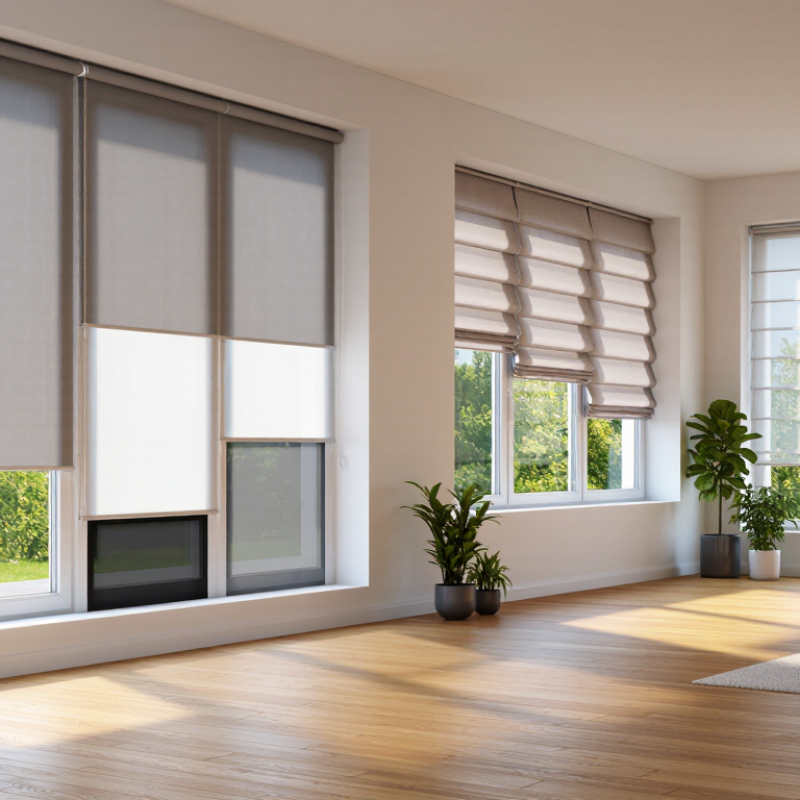
Motorized Shade Types by Lift Design: Roller, Roman, Cellular, and Venetian
What Are the Types of Motorized Window Shades?
Motorized Shade Types by Lift Design: Roller, Roman, Cellular, and Venetian
Motorized shades are grouped by how their material moves and folds, not just by their controls. Roller shades wind onto a tube, leaving a clean, flat surface when lowered. They suit wide windows and tight spaces, though bright afternoon light can still create glare through lighter fabrics. Roman shades gather into soft horizontal folds. Their textured fabric looks warmer, but the stacked folds need clearance above the window.
Cellular shades rise in compact pleats that form air pockets. The U.S. Department of Energy’s Energy Saver guidance reports that cellular shades can cut window heat loss by 40% or more and unwanted solar heat gain by up to 60%. Those figures depend on fit and installation. Small detail: gaps matter. Venetian shades use rotating horizontal slats, so users can tilt them to redirect daylight without fully raising the shade. Slats offer precise light control, but dust can collect along their edges. Motorized lift systems make each type easier to adjust, especially over tall windows; they do not change the shade’s basic insulation or light-control properties. A practical choice depends on the room: soft folds for a bedroom, adjustable slats for a bright office, or a compact roller for a shallow frame.
What Are the Types of Motorized Window Shades? — Motorized Shade Types by Lift Design: Roller, Roman, Cellular, and Venetian
| Shade type | How it moves | Light and privacy | Insulation | Typical strengths | Things to consider |
|---|---|---|---|---|---|
| Roller | A motor turns a tube, winding the fabric around it to raise the shade and unwinding it to lower the shade. | Available in sheer, light-filtering, and room-darkening fabrics. Coverage and edge gaps affect privacy and light leakage. | Generally modest; performance depends on the fabric, fit, and whether additional insulating features are used. | Simple profile, broad fabric choices, and a compact stack when raised. Suitable for many window shapes and room styles. | A single fabric panel does not adjust light direction. For stronger room darkening, a close fit or side channels may help reduce edge light. |
| Roman | A motorized lift raises fabric into horizontal folds and lowers it into a relatively flat panel. | Light control and privacy vary with the selected fabric and lining; lined options can provide greater light reduction. | Usually limited to moderate, depending on fabric layers, lining, and how closely the shade fits the window. | Soft, tailored appearance with a wide range of fabrics. Works well where decorative fabric is a priority. | Raised fabric forms a stack that takes up space above the window. Heavier fabrics can require a suitably rated lift system. |
| Cellular (honeycomb) | A motorized lift raises and lowers pleated fabric cells that expand and compress in a honeycomb structure. | Offered in varying opacity levels. Single-, double-, and other cell constructions are available depending on the product. | Trapped air in the cells can improve insulation compared with many unstructured shade fabrics; results depend on fit and construction. | Combines a compact appearance with cellular insulation. Some models offer top-down/bottom-up operation, if compatible with the motor system. | Cell fabric can collect dust and may need careful cleaning. The cell structure and available lift options vary by design. |
| Venetian | A motor can tilt horizontal slats to adjust light and views; some systems also motorize raising and lowering the slats. | Tilting the slats offers adjustable light and privacy, but small gaps between slats can still admit light. | Typically limited compared with cellular shades; slat material and window fit influence overall performance. | Precise control over daylight and sightlines without needing to raise the entire covering. | Slats can allow some light through even when closed. Confirm whether the system motorizes tilt, lift, or both. |
Note: Motorization describes how a shade is operated; it does not by itself determine light blocking, privacy, or insulation. Those results depend on the shade’s material, construction, fit, and available features.
Related Posts
-
What Are the Top Motorized Roller Shades?
-
Best Horizontal Blinds Options for Global Buyers in 2026?
-
How to Choose Blackout Roller Blinds for Your Home?
-
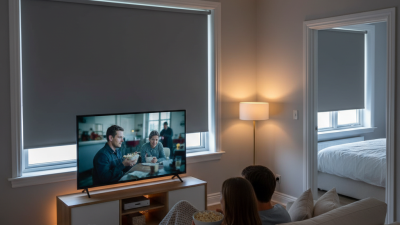
What are the Benefits of Blackout Roller Blinds for Your Home?
-
How to Choose the Best Kitchen Blinds for Your Home?
-
How to Choose the Best Horizontal Blinds for Your Home Decor?

