2026 Top Wooden Blinds for Windows Which Should You Buy?

Choosing the best wooden blinds for windows in 2026 is not only about matching oak tones to a room. It involves light control, moisture exposure, privacy, child safety, and long-term maintenance. A beautiful blind can still disappoint if its slats warp beside a steamy bathroom or block too little afternoon glare. Small details matter. Very much.

Window-treatment educator and author Deb Barrett has said, “The best window covering is the one that fits the window, the room, and the way you live.” That practical view should guide every purchase. Measure the glass, frame depth, and available mounting space before comparing finishes. Wider slats create a cleaner appearance and let in more daylight, while narrower slats offer a more traditional look. Cordless operation also deserves attention, especially in homes with children or pets.

This guide examines the strongest wooden blinds for windows expected in 2026, from warm basswood designs to durable faux-wood alternatives. It considers real-world details, including uneven frames, dusty slats, harsh sunlight, and damp kitchens. Some products may look almost identical online. They are not always equal in weight, hinge quality, or paint durability. That is where many buying guides become too optimistic.

A slightly imperfect finish may feel more natural than a flawless synthetic surface. However, natural wood requires care. Readers should also question whether genuine wood is necessary for every room. In humid spaces, faux wood may perform better. The right choice depends on the window, not merely the trend.
2026 Top Wooden Blinds for Windows Which Should You Buy?

What Are Wooden Blinds and How Do They Work?

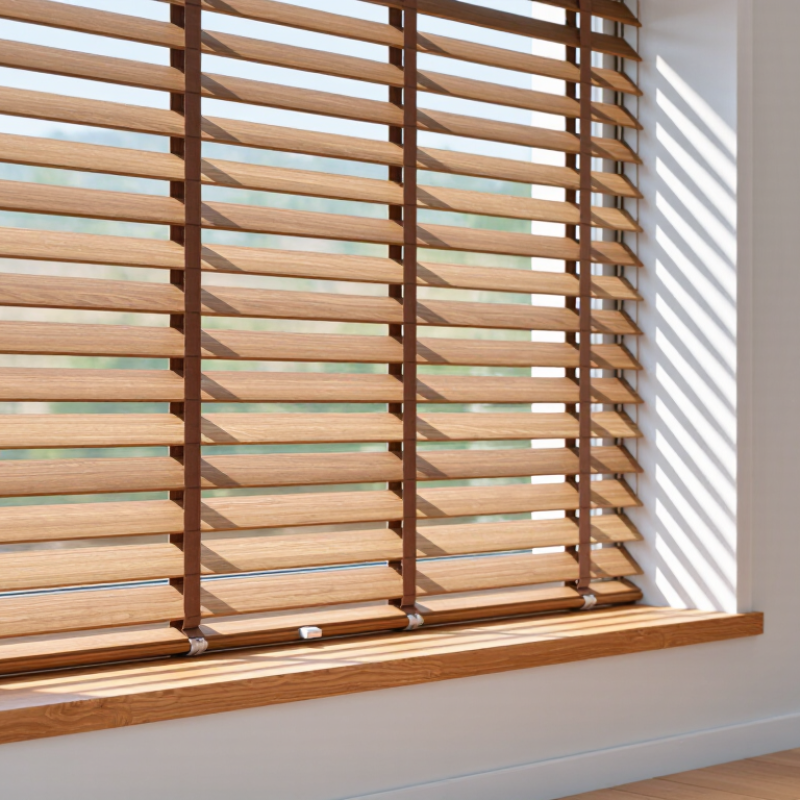
Wooden blinds are window coverings made from horizontal slats of wood, or wood-like materials. The slats sit inside a frame and can be raised, lowered, or tilted. Tilt them open, and daylight slips through in narrow bands. Close them, and the room feels more private, though small gaps may still let in light.

A lift cord or cordless mechanism moves the blind up and down. A separate wand or control adjusts the slat angle on many models. This lets you balance daylight, privacy, and views without opening the window. Real wood often has visible grain and a warm, varied finish. It can be sensitive to moisture, so a steamy bathroom may not be the best place for it. Faux wood can handle damp conditions better, but may feel heavier. The right choice depends on the room, not just the look.

Tips: Measure the inside or outside of the window frame carefully, and check the fitting instructions before ordering. Leave enough clearance for handles and nearby trim. Try tilting the slats at different angles during the day; a small adjustment can reduce screen glare. Wooden blinds can darken a room, but they rarely create complete blackout. That detail is easy to overlook.

2026 Top Wooden Blinds for Windows: Which Should You Buy?

What Are Wooden Blinds and How Do They Work?

Wooden blinds use horizontal slats that tilt to adjust light and privacy, and lift to uncover the window. Common nominal slat widths include 25 mm, 35 mm, and 50 mm; availability varies by seller and product. Narrower slats provide more slats across the same blind height, while wider slats create a broader view when open.

Which Wooden Blind Materials, Slat Sizes, and Styles Are Available?

Wooden blinds differ in more than appearance. Basswood is lightweight and usually resists warping in stable indoor conditions. Bamboo offers visible grain and a lighter, casual look, though its slats may vary in color. Faux wood, often made from PVC or composite materials, handles humid rooms better than natural wood. It can feel heavier, so check the mounting surface before choosing it.

Slat size changes both the view and the room’s character. Narrow slats create a finer pattern and suit smaller windows, but collect dust between more closely spaced lines. Wider slats offer a clearer view when tilted open and can make large windows feel less crowded. Common widths range from about 1 to 2.5 inches; measure the window depth, since wider slats need room to stack neatly. Choose painted finishes for a crisp look, or stained wood when you want the grain to remain visible. Color samples can look different beside warm floors or cool daylight. That detail is easy to miss.

Tips: For kitchens or bathrooms, favor moisture-tolerant faux wood. In dry living areas, compare real wood samples under the room’s actual lighting. Measure each window separately, even if two openings look identical. Also consider cords, child safety, and how far the blinds project when raised. A beautiful blind that blocks a window handle is still a poor fit.

2026 Top Wooden Blinds for Windows Which Should You Buy? — Which Wooden Blind Materials, Slat Sizes, and Styles Are Available?
Material or Style Typical Slat Size Appearance and Light Control Best Suited To Things to Consider
Basswood blinds Commonly 1 in, 2 in, or 2.5 in Painted or stained solid-wood slats offer a traditional, natural-grain look. Tilting the slats provides adjustable daylight and privacy. Living rooms, bedrooms, and other dry indoor spaces where a classic wood finish is desired. Wood can expand, contract, or warp with sustained humidity or moisture. Use a damp cloth rather than soaking the slats.
Paulownia wood blinds Commonly 2 in or 2.5 in Lightweight wood slats with a natural grain that can be stained or painted. Windows where lighter-weight wood blinds are preferred, including wider windows when the product is properly sized and supported. As with other natural wood, avoid prolonged exposure to water and high humidity. Construction and finish vary by product.
Bamboo blinds Varies by design; often made as woven panels rather than conventional wide slats Woven bamboo creates a textured, organic appearance. Light filtering depends on the weave and any lining. Casual or natural-style interiors, especially where filtered daylight and texture are preferred. Not all bamboo shades operate like tilting slat blinds. Check whether a liner is available if greater privacy or light blocking is needed.
Wood blinds with wide slats Usually 2 in or 2.5 in Fewer, wider slats create a more open view when raised or tilted and a clean, contemporary look. Larger windows and rooms where a broad view and a less segmented appearance are priorities. Confirm that the window depth and mounting space meet the product's requirements; larger slats may need more clearance.
Wood blinds with narrow slats Usually 1 in More slats create a detailed, traditional appearance and allow precise adjustment of light and privacy. Smaller windows or interiors that suit a finer, more traditional profile. More slats can mean more surfaces to dust. Check the product's stack height when the blind is raised.
Painted wood blinds Commonly 1 in, 2 in, or 2.5 in Opaque painted finishes provide a smooth, consistent color while retaining the structure of wood slats. Rooms where a coordinated solid color is preferred over visible wood grain. Paint can chip or scratch if handled roughly. Inspect finish-care instructions before cleaning.
Stained wood blinds Commonly 1 in, 2 in, or 2.5 in Transparent or semi-transparent stains highlight the natural grain; color varies with the wood and finish. Interiors that feature natural wood tones or visible grain. Samples can help assess color because wood grain and screen or room lighting affect the finished appearance.
Faux-wood blinds (alternative) Commonly 2 in or 2.5 in Designed to resemble painted wood, with tilting slats for adjustable light and privacy. Kitchens, bathrooms, or other spaces where moisture exposure is a concern. These are not solid-wood blinds. Material, weight, heat tolerance, and care instructions differ by product.

Buying tip: Choose solid wood for a natural finish in dry rooms; consider a moisture-tolerant alternative for damp spaces. Measure the window and check the specific blind’s mounting-depth, operating, and cleaning requirements before ordering.

How Should You Choose Wooden Blinds for Each Room?

Choosing wooden blinds room by room works better than buying one style for the whole house.

In a living room, wider slats can frame a broad window and let daylight spread across the floor. If the room faces a street, check the view from outside at night; tilted slats may still reveal silhouettes. A warm finish can soften pale walls, but samples look different under morning and evening light. Take one home and check both.

Bedrooms need dependable privacy and flexible light control. Pairing blinds with curtains can darken the room more effectively than slats alone.

Not every room agrees. In kitchens and bathrooms, humidity and splashes can warp natural wood, so verify the product’s moisture guidance or consider a suitable alternative.

For a home office, adjustable slats can reduce screen glare without making the room gloomy. Measure each window carefully, including inside-mount depth; even a small measuring error can leave awkward gaps.

I used to think matching every room looked polished, but it can feel flat. A consistent finish with different slat widths may work better.

If children use the room, look for cordless operation and follow the installation instructions closely.

How Do the Top Wooden Blinds Compare in Quality and Performance?

Wooden blinds differ most in slat consistency, finish, and how well the mechanism handles daily use. Solid wood is light and offers a natural grain, but it can be more sensitive to humidity and temperature changes. Faux wood usually weighs more, yet it tends to resist moisture better in kitchens and bathrooms. Neither option is automatically superior; room conditions matter.

Look closely at the slats. Even edges, smooth surfaces, and a finish without rough patches suggest careful production. Open and close the blinds several times before buying, if possible. The lift should move steadily, and the tilt rod should turn without sticking. Small gaps between slats can let in more light than expected. That matters in a bedroom.

Good hardware counts. Sturdy cords or a dependable cordless mechanism, secure brackets, and a firm headrail often make a bigger difference over time than a polished sample in a showroom. Check the warranty details and confirm that replacement parts are available. Also measure the window carefully; a well-made blind can still look uneven if its fit is off. I have found that darker finishes show dust more clearly, though this may depend on the room. The best choice is the one suited to your light, moisture, and cleaning habits.

What Should You Know About Measuring, Installing, and Maintaining Them?

Measuring Wooden Blinds

Accurate measurements matter more than the window label. Use a steel tape, and measure the width at the top, middle, and bottom. For an inside mount, use the narrowest width and check that the frame has enough depth for the headrail. Measure the height on both sides, too. Record each measurement clearly; even a small error can leave a bright strip of light or make the blind bind.

Tips: Measure in inches to the nearest eighth, unless the supplier specifies otherwise. Check whether the instructions call for deductions before ordering. Don’t guess.

Installing and Maintaining Them

Before installation, compare the brackets with the supplied instructions and locate the window frame, not just the trim. Keep the blind level, and test the lift and tilt controls before tightening everything. If the frame is uneven, pause and reassess rather than forcing the headrail into place. I’ve found that rushing this step often creates a crooked drop.

For routine care, dust the slats with a soft cloth or a clean, dry microfiber duster. Tilt them closed one way, wipe gently, then reverse their angle. Avoid soaking the wood; excess moisture can cause swelling or warping. A damp cloth may be suitable for small marks, but dry the area promptly. Real wood can change slightly with humidity, so perfect alignment may not last forever.

Call Now