7 Tips for Buying Motorized Blinds Globally?

Buying motorized blinds across borders looks simple until voltage, window dimensions, and connectivity standards collide. A product that performs quietly in London may fail in Singapore’s humidity or require different wiring in North America. This guide examines seven practical checks before you purchase, including motor quality, fabric performance, control systems, installation, warranty coverage, and after-sales support. Small details matter. Measure twice.

Lutron founder Joel Spira expressed a useful design principle: “The best technology is the technology you don’t see.” That idea fits modern motorized blinds. Good systems should open smoothly, respond reliably, and remain visually discreet. However, convenience should not replace technical judgment. Buyers must confirm voltage compatibility, wireless protocol support, battery access, and integration with existing smart-home platforms. Local installers also need clear instructions and suitable mounting hardware.

Global purchasing involves more uncertainty than many product pages admit. Shipping damage, unclear return terms, or unavailable replacement parts can turn a premium purchase into an expensive lesson. I have seen buyers focus on app features while ignoring sunlight exposure and fabric weight. That is backwards. A heavier blackout shade may need a stronger motor, especially across a wide window. This introduction will help readers compare international suppliers with greater confidence, while recognizing one uncomfortable truth: the cheapest option may not remain cheap after installation, customs handling, and maintenance. Test the details. Then trust the system.
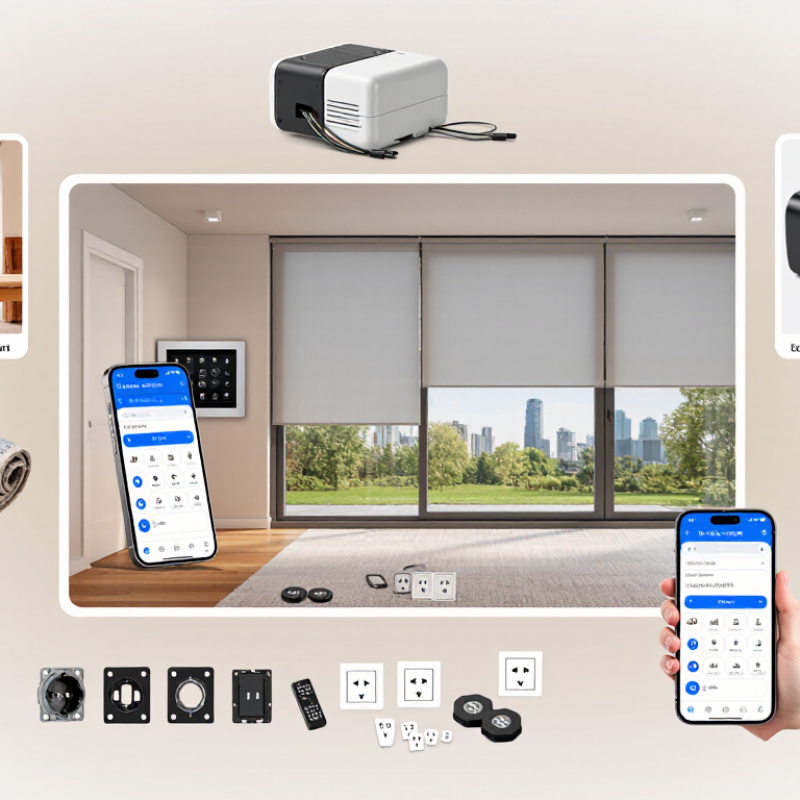
7 Tips for Buying Motorized Blinds Globally?

Define Seven Buying Priorities: Light, Privacy, Insulation, Safety, Control, and Cost

7 Tips for Buying Motorized Blinds Globally

When I assess motorized blinds, I define seven buying priorities: light, privacy, insulation, safety, control, compatibility, and cost. Light control should match each room’s purpose. A bedroom may need near-total darkness, while a kitchen benefits from soft daylight. Privacy also changes by window height, street exposure, and nighttime lighting. Test fabric samples near the glass. Small differences become obvious after sunset.

Insulation matters in both hot and cold climates. Consider cellular structures, reflective linings, and the window’s direction. Safety deserves careful attention, especially around children and pets. Choose cordless designs and secure mounting hardware where appropriate. Control should feel simple, not impressive only during installation. Check wall switches, remote access, schedules, and manual operation during power loss. Compatibility is often overlooked. Confirm voltage, communication standards, local availability, and integration with your existing home system.

Cost includes more than the purchase price. Add measuring, installation, batteries, maintenance, replacement parts, and possible import charges. Ask for written specifications and warranty conditions. I also recommend checking independent installation reviews, not just product photographs. Measure every window twice, including recess depth and handle clearance. My own mistake was trusting identical-looking windows to share identical measurements. They did not. A cheaper option can become expensive when it needs rewiring or custom repairs. Allow room for uncertainty. Global purchases involve different climates, building styles, and service expectations.

Measure Windows Within ±3 mm and Match Each Shade to Manufacturer Limits

Buying motorized blinds globally requires more than choosing an attractive fabric. Start with accurate window measurements. Measure width and height at the top, middle, and bottom. Record every result in millimeters. The readings should remain within ±3 mm. Small differences matter. For an inside mount, use the narrowest width and shortest height. For an outside mount, include the required overlap. Never round measurements too early. A single careless millimeter can affect smooth movement, light control, and installation.

Check the manufacturer’s limits before ordering each shade. Confirm the minimum and maximum width, drop, tube capacity, fabric weight, and mounting depth. A wide blackout shade may need stronger hardware than a small sheer shade. Also inspect window handles, vents, locks, and nearby walls. They can block the cassette or create friction. Ask for a technical drawing when dimensions seem unclear. This step feels slow, but it prevents expensive returns. Power compatibility also deserves attention. Verify voltage, charging methods, plug types, and control frequency for the destination country.

Keep a measurement sheet with the room, window number, dimensions, mounting style, and date. Photograph unusual corners and sloping sills. Test one shade before placing a large order. In real projects, measurements are sometimes correct, yet the wall is not square. That possibility is easy to overlook. Leave practical clearance where the installation guide requires it, and have a qualified installer review the final details before production.

Compare Motors, Battery Power, and Protocols: Matter, Thread, Zigbee, and RF

Buying motorized blinds globally requires more than checking lifting capacity. Match the motor’s torque to the blind’s fabric, width, and mounting angle. A weak motor may stall, while an oversized motor can create unnecessary noise. Battery-powered models simplify installation, especially near concrete walls or tall windows. Check charging access, battery temperature limits, and expected cycles per week. A rechargeable battery lasting six months indoors may perform differently beside a cold window. I used to focus mainly on battery capacity. That was too narrow.

Protocol choice affects daily reliability. Matter can simplify control across compatible platforms, but it still depends on a stable home network. Thread uses low-power mesh communication and usually needs a border router. Its response can be smooth, though signal planning matters in large homes. Zigbee is efficient and proven, but many setups require a dedicated hub. RF systems often work well through walls and need less network configuration. They may offer fewer feedback features, however. Keep that limitation visible.

Test before buying. Place the blind in its final room, close nearby doors, and run ten open-and-close cycles. Listen for changing motor noise. Check whether position feedback remains accurate. Ask about local frequency rules, replacement batteries, firmware support, and manual operation during outages. Compatibility claims deserve verification, not assumptions. A small test can expose a costly mismatch.

7 Tips for Buying Motorized Blinds Globally

Compare motor types, battery power, wireless protocols, installation requirements, and long-term operating considerations.

Tip Decision Area What to Compare Typical Characteristics Best Use Global Buying Check
1 Choose the motor power format Compare hardwired AC/DC motors, rechargeable battery motors, replaceable-battery motors, and solar-assisted systems.
  • Hardwired: continuous power and suitable for large or frequently operated blinds, but installation may require concealed wiring.
  • Rechargeable: cleaner installation and generally convenient for retrofit projects.
  • Replaceable battery: easy to service, but batteries must be changed periodically.
  • Solar-assisted: can extend battery life where the window receives sufficient daylight; performance depends on shading and climate.
New construction usually favors wired power, while existing homes often favor rechargeable or replaceable-battery systems. Confirm local electrical requirements, plug or transformer compatibility, cable routing, charging access, and whether an electrician is required.
2 Match motor capacity to blind size Check the manufacturer’s maximum shade width, fabric or slat weight, tube diameter, lifting capacity, and operating speed. A larger or heavier blind needs higher torque. Wide blinds may also need a stronger tube, multiple support points, or two independently controlled motors. Maximum capacity is not determined by width alone. Heavy blackout fabrics, large roller shades, wide blinds, and awkwardly shaped windows require careful torque selection. Provide the supplier with accurate width, drop, fabric weight, tube size, mounting method, and expected daily operating cycles. Avoid selecting only by price or advertised speed.
3 Compare battery power realistically Compare battery chemistry, rated capacity, charging method, charging time, low-battery alerts, and expected cycle life. Rechargeable lithium-ion or lithium-based packs are common because of their energy density. Battery runtime varies with blind size, load, temperature, operating frequency, and wireless activity. A quoted runtime is not universal. Battery motors are practical where wiring is difficult, especially for bedrooms, rental properties, and retrofit installations. Ask for runtime under a stated number of daily cycles, charging voltage, connector type, storage conditions, replacement procedure, and transport restrictions for battery shipments.
4 Understand Matter and Thread Matter Thread Compare application compatibility with the underlying network connection. Matter is an application-layer smart-home standard that can support window-covering devices. Thread is a low-power IPv6 mesh network commonly used as a transport for Matter devices. A Thread-based Matter installation normally needs a compatible border router, while Matter over Wi-Fi uses the home Wi-Fi network. Homes seeking multi-platform interoperability and local smart-home control, provided the required controller and border-router infrastructure is available. Verify the exact Matter device type, supported commissioning method, controller compatibility, firmware-update process, and whether a separate border router is needed.
5 Evaluate Zigbee mesh networking Zigbee Compare hub requirements, device profiles, mesh coverage, and interoperability between ecosystems. Zigbee is a low-power wireless mesh protocol operating commonly in the 2.4 GHz band. Mains-powered Zigbee devices can often help extend the mesh, but battery-powered blinds generally do not act as always-on routers. A compatible hub or coordinator is normally required. Homes that already use a compatible Zigbee hub and want low-power control with scheduled or automated operation. Confirm the supported Zigbee profile or device type, hub compatibility, regional radio configuration, reset procedure, and local-control behavior if internet service is unavailable.
6 Assess RF remote-control systems RF Compare frequency band, range, pairing method, encryption, channel capacity, and gateway availability. RF control can provide simple point-to-point or multi-channel operation without a home Wi-Fi network. Some systems use proprietary communication methods, while others may use common frequency bands such as sub-GHz or 2.4 GHz. RF alone does not guarantee smart-home interoperability. Straightforward remote control, reliable local operation, and installations where internet or a smart-home hub is not required. Check legal radio-frequency requirements in the destination country, indoor range through walls, interference risks, remote battery type, gateway options, and whether third-party integration is available.
7 Review safety, maintenance, and after-sales support Compare obstacle detection, manual override, noise level, child-safety features, spare parts, warranty terms, and software support. A quality system should provide dependable stopping limits and a safe response to obstruction where applicable. Noise depends on motor design, gearing, fabric tension, mounting, and blind construction. Wireless products also require firmware and app support over their expected service life. Family homes, hospitality projects, offices, and any installation where quiet operation and long-term serviceability matter. Request operating-noise data measured under defined conditions, installation instructions in the destination language, replacement-part availability, warranty coverage, software-support period, and recycling guidance for batteries and electronics.

Specifications such as runtime, lifting capacity, wireless range, and noise level vary by motor design, blind construction, installation conditions, regional regulations, and operating frequency. Always verify the latest technical documentation before purchase.

Verify Safety Compliance with ANSI/WCMA A100.1-2022, EN 13120, and UL 325

Buying motorized blinds globally requires more than comparing prices and app features. Safety documentation matters. The U.S. Consumer Product Safety Commission reported nearly 17,000 children treated for window-covering injuries and about 200 deaths from 1990 to 2015. Those figures make cord access and movement limits practical concerns, not paperwork.

Tip 1: Ask for the exact compliance scope.

ANSI/WCMA A100.1-2022 addresses window-covering safety, including operating cords, accessible loops, and testing expectations. EN 13120 covers internal blinds sold in European markets, with requirements for construction, operation, and child safety. UL 325 may apply to powered window operators and related systems, especially their controls and entrapment protection. The standards are not interchangeable. Request dated test reports, product drawings, and installation instructions. A certificate alone is not enough.

Tip 2: Check the complete installation.

Confirm the motor, blind, controller, power supply, and wall switch were assessed as one system.

Tip 3: Test obstruction response with a soft object, then repeat after installation.

Tip 4: Verify low-voltage wiring, emergency operation, and local electrical requirements.

Tip 5: Keep cords away from beds, cribs, and climbing furniture.

Tip 6: Confirm language, labeling, and service support for the destination country.

Tip 7: Record serial numbers and inspection dates.

I have seen buyers focus on smartphone control while overlooking manual override access. That is an easy mistake. Standards evolve, and enforcement differs between markets. Ask an independent testing laboratory or qualified installer to review gaps before ordering.

Assess Total Cost, Warranty, Installation, and Regional After-Sales Support

Buying motorized blinds internationally requires more than comparing the product price. The real expense may include shipping, import duties, local taxes, wiring, smart hubs, and installer travel. Tip 1: Request a complete delivered-cost estimate. Tip 2: Confirm voltage, plug type, and control-system compatibility before payment. A cheaper quote can become expensive quickly.

Warranty terms deserve careful reading. Tip 3: Check whether coverage includes the motor, battery, fabric, controls, and labor. Tip 4: Ask who pays return shipping for defective parts. Some warranties cover replacement components but exclude local service. That detail matters. Keep invoices, installation records, and videos of faults. These documents can speed up a claim. I would also question vague promises about “global coverage.”

Installation quality affects noise, alignment, and safety. Tip 5: Use a trained local installer when possible. Ask for written labor rates and a realistic completion date. Tip 6: Confirm whether the installer can test automation, manual override, and emergency operation. Regional after-sales support is equally important. Tip 7: Request a local contact, spare-parts timeline, and service process before ordering. A remote support team may answer quickly, yet still lack nearby technicians. In practice, buyers often focus on appearance and forget future repairs. That mistake is understandable, but costly. Check regional support twice.

Call Now