How to Source Motorized Roller Shades Globally?
Global sourcing of motorized roller shades is no longer only a price comparison exercise. It involves energy performance, automation compatibility, fabric quality, and dependable after-sales support. The International Energy Agency reports that buildings consume about 30% of global final energy and produce approximately 26% of energy-related emissions. This context gives automated shading a practical role in reducing solar heat gain and improving occupant comfort.
Market research also indicates strong demand. Grand View Research projects continued growth in the global smart blinds market, driven by smart-home adoption, wireless controls, and energy-saving expectations. Yet market growth does not guarantee reliable products. A supplier may show an attractive catalog while offering weak battery testing, inconsistent fabric dyeing, or incomplete export documentation. One sample can look excellent. The second batch may not.
A professional sourcing process should examine the complete product system. Check motor torque, noise levels, battery capacity, cycle testing, fabric openness, tube strength, and control protocols such as Zigbee, Wi-Fi, or Matter. Request test reports, installation drawings, warranty terms, and production photos before negotiating volume. The U.S. Department of Energy recognizes window attachments as a potential method for improving building energy performance, but results depend on correct sizing and installation.
Country selection also matters. Compare lead times, minimum order quantities, packaging standards, payment protection, and technical communication. Visit a factory when possible, or arrange an independent inspection. No spreadsheet can predict every installation problem. A careful buyer leaves room for testing, revision, and honest supplier feedback before committing to global distribution.
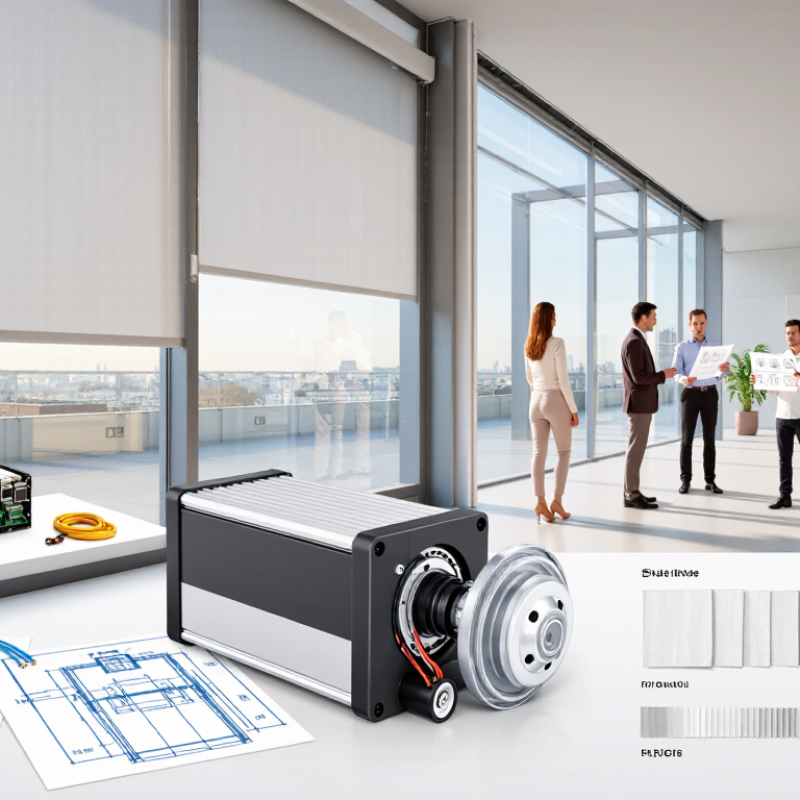
Define Project Requirements for Motorized Roller Shades
Before contacting overseas suppliers, define the room conditions and operating goals. Record each window’s width, height, recess depth, and mounting surface. Note unusual shapes, nearby handles, exposed beams, and access limits. A precise measurement sheet prevents costly revisions. It also gives suppliers comparable information. Specify blackout, light-filtering, or glare-control fabric. Describe the required privacy level, color range, openness factor, and cleaning expectations. Fabric samples matter because screen openness can look different under sunlight.
Define the motor system in practical terms. State the shade weight, lift speed, noise tolerance, duty cycle, and expected daily operations. Identify power options, cable routes, battery access, and emergency manual control. List the preferred control method, such as wall switches, remote controls, sensors, or building automation. Confirm voltage, communication protocols, and control-group limits before requesting prices. Compatibility is often assumed too early. It should be tested.
For global sourcing, add packaging, installation, spare parts, lead time, and inspection requirements. Request drawings, wiring diagrams, test reports, material data, and a sample assembly. Ask how suppliers handle measurement errors and replacement claims. Clear acceptance criteria protect both sides without promising what cannot be verified. A pilot order with several window sizes can expose weak brackets, noisy motors, or fabric color shifts. Do not hide uncertainty. Some decisions will change after site testing, and that is normal. A workable specification leaves room for evidence, not guesswork.
How to Source Motorized Roller Shades Globally? - Define Project Requirements for Motorized Roller Shades
| Requirement Category | Project Requirement | Recommended Target / Typical Range | Why It Matters | Supplier Verification Method |
|---|---|---|---|---|
| Window Dimensions | Define finished width and height for every opening. | Record each opening individually; specify inside or outside mount and dimensional tolerance of approximately ±2 mm. | Incorrect measurements can cause installation gaps, fabric interference, or excessive motor load. | Request a measurement schedule, shop drawings, and a physical sample based on the largest opening. |
| Shade Size Capacity | Confirm the allowable maximum width, height, and fabric area. | Use the selected system’s certified limits; many standard systems are designed for approximately 2.0–3.0 m widths, while larger openings may require heavy-duty hardware. | A shade may fit physically but still exceed the tube, bracket, or motor torque rating. | Obtain a signed load chart showing maximum width, drop, fabric weight, and roll diameter. |
| Fabric Type | Select fabric according to light control, privacy, glare reduction, and interior design needs. | Choose sunscreen, dimout, or blackout fabric; specify composition, color, and edge-finish requirements. | Fabric weight and thickness directly affect roll diameter, motor torque, and final appearance. | Review technical datasheets, color cards, construction samples, and physical roll-up samples. |
| Openness Factor | Define the percentage of visible fabric openness for solar-screen materials. | Common selections are approximately 1%, 3%, or 5%; lower openness generally provides greater glare and solar control. | Openness influences daylight, outward visibility, privacy, and cooling loads. | Request laboratory data and a fabric sample viewed from both sides under daylight conditions. |
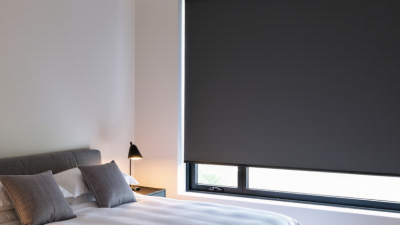
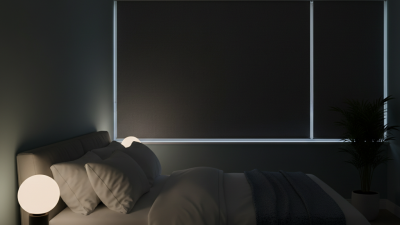
| Blackout Performance | Establish the required darkness level for bedrooms, media rooms, or conference spaces. | Use blackout fabric with side channels, a cassette, or overlapping guides when near-total darkness is required. | Fabric alone cannot eliminate light leakage around the perimeter. | Approve a full-size corner or perimeter mock-up, including the headbox and side gaps. |
| Motor Power | Match motor torque and speed to shade dimensions, fabric weight, and tube diameter. | Specify torque in N·m and operating speed in revolutions per minute; the required torque must exceed the calculated shade load. | Undersized motors may stall, overheat, or produce uneven movement. | Request torque curves, duty-cycle limits, noise data, and a test report using the selected fabric. |
| Power Supply | Select the power architecture for each installation zone. | Battery-powered, low-voltage DC, or mains-powered systems; common low-voltage options include 12 V DC or 24 V DC. | Power selection affects wiring, access for maintenance, installation cost, and local electrical compliance. | Verify voltage, current, plug type, transformer capacity, battery specifications, and local approval requirements. |
| Control Method | Define how users and building systems will operate the shades. | Choose wall switch, handheld remote, dry contact, wired bus, wireless control, or a combination. | Control compatibility determines commissioning complexity and future expandability. | Request communication protocols, wiring diagrams, addressing procedures, and integration test results. |
| Automation Functions | Identify the required schedules, scenes, sensors, and group movements. | Include upper and lower limits, intermediate stop positions, timed schedules, and optional sunlight or temperature response. | Clear functional requirements prevent disputes during programming and handover. | Create a point list and demonstrate each programmed function during factory acceptance testing. |
| Noise Level | Set an acoustic target for bedrooms, offices, hospitality areas, or healthcare spaces. | Request measured sound pressure data; a project target below approximately 45 dB(A) is often used for quiet interior applications, subject to test conditions. | Perceived noise depends on motor, bracket rigidity, shade size, and room acoustics. | Require test conditions, measurement distance, mounting details, and an installed sample demonstration. |
| Safety Requirements | Define child safety, obstacle detection, emergency operation, and manual override needs. | Prefer cordless operation in accessible areas and require obstruction protection where appropriate. | Safety features reduce entanglement, crushing, and operational risks. | Review risk assessments, safety declarations, installation instructions, and applicable local standards. |
| Environmental Conditions | Identify indoor, humid, high-temperature, coastal, or exterior exposure. | Use indoor-rated components for normal interiors; require corrosion-resistant hardware and suitable enclosures for humid or exterior locations. | Moisture, salt, ultraviolet exposure, and temperature can shorten service life. | Request operating temperature, humidity limits, ingress rating where applicable, and corrosion-test information. |
| Fabric Fire Performance | Match fabric fire performance to the building type and destination market. | Specify the required classification under the project’s applicable fire code; do not rely on a generic “fire-retardant” statement. | Fire classifications and test methods vary by jurisdiction. | Obtain current test reports identifying the exact fabric construction and test standard. |
| Electrical Compliance | Confirm that motors, controls, adapters, and wiring meet destination-market requirements. | Specify the destination country, nominal voltage and frequency, plug configuration, and required conformity documentation. | Electrical requirements differ among markets and can affect customs clearance and installation approval. | Request declarations, safety reports, EMC results, labels, and installation manuals for the exact model supplied. |
| Durability and Cycle Life | Estimate daily movements and required service life. | State expected cycles per day and request a documented cycle-life rating; commercial projects commonly require substantially more usage than residential projects. | Duty cycle influences motor selection, warranty terms, and maintenance planning. | Ask for endurance-test methodology, rated cycles, duty-cycle limits, and warranty exclusions. |
| Installation Conditions | Document substrate, recess depth, mounting height, access restrictions, and available power routes. | Confirm minimum headbox depth, bracket clearance, fixing type, cable route, and service access before production. | A technically suitable shade may be unusable if the site cannot accommodate its mounting system. | Use site surveys, coordinated drawings, fixing samples, and an installation method statement. |
| Sample and Approval Process | Set approval milestones before mass production. | Approve fabric, color, hardware finish, control behavior, dimensions, packaging, and installation sample. | Documented approvals reduce specification drift and rework. | Use signed approval sheets, revision-controlled drawings, and a pre-production sample. |
| Quality Inspection | Define measurable acceptance criteria for every shipment. | Check dimensions, fabric defects, roll alignment, motor operation, limit settings, accessories, labels, and packaging. | A clear inspection plan makes quality consistent across multiple production batches. | Agree on an inspection checklist, sampling level, defect classification, and corrective-action procedure. |
| Packaging and Labeling | Protect long, delicate components and ensure every shade is traceable. | Use impact-resistant packaging with moisture protection, opening identification, wiring labels, and installation hardware packed by shade. | Poor packaging can cause bent tubes, fabric damage, missing parts, and installation delays. | Approve packaging drawings, carton markings, packing lists, and photographs before shipment. |
| Delivery Planning | Coordinate sample, production, inspection, shipping, customs, and installation dates. | Allow time for approval, production, quality inspection, international transit, customs clearance, and site storage. | Motorized shades often require coordinated delivery with electrical and interior-finish trades. | Request a milestone schedule, shipping documents, packing list, and shipment tracking process. |
| Warranty and Spare Parts | Define warranty coverage, service response, and replacement-part availability. | Specify warranty duration, covered components, response time, motor replacement process, and availability of brackets, adapters, controls, and fabric components. | A global project needs service support after installation, not only a low initial purchase price. | Obtain written warranty terms, spare-parts pricing, troubleshooting guides, and remote or on-site support procedures. |