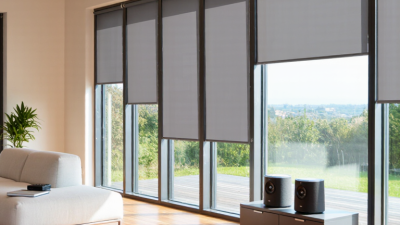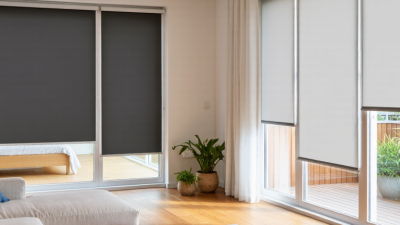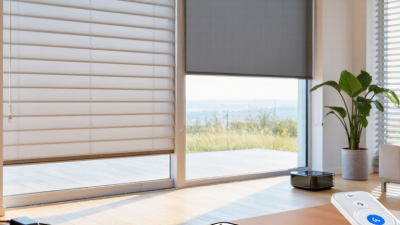
Buying automatic blinds for a global project involves more than selecting attractive fabrics and quiet motors. Each location may present different sunlight, humidity, window sizes, voltage systems, and installation practices. A solution proven in London may fail in Dubai’s heat or Singapore’s moisture. Experience matters here. Project teams should compare tested performance, motor lifespan, control compatibility, and local service capacity before approving a large order.
Small details can change the result. A bedroom may require blackout fabric, while a lobby needs glare control without losing daylight. Confirm whether the blinds connect with the building management system, room sensors, or scheduled controls. Review wiring diagrams carefully. Check spare-part availability. Ask suppliers for samples, technical documents, and references from comparable international projects. A physical mock-up can reveal fabric reflections, noise, and mounting problems that drawings hide.
Be realistic about cost. The lowest quotation may exclude commissioning, training, replacement motors, or regional support. The most expensive option is not automatically the safest choice. Some specifications may look impressive but offer little value in daily use. Teams should also consider cleaning access and future software updates. These points are easy to overlook.
A careful buying process protects comfort, energy performance, and project timelines. It also creates a clearer relationship between owners, designers, installers, and manufacturers. The following ten tips examine practical decisions, common mistakes, and questions worth asking before ordering automatic blinds for projects across multiple markets. Good planning helps. It does not remove every risk.

Tip 1: Map every window type before selecting automatic blinds. Record width, height, opening direction, frame depth, and glass shape. Fixed windows, sliding panels, skylights, and tilted windows may need different mounting systems. Tip 2: Confirm 24 V power early. Check cable routes, transformer locations, voltage drop, and access for maintenance. Do not assume one power design fits every building.
Tip 3: Study the local climate. Humid coastal air, desert dust, freezing temperatures, and strong sunlight affect materials and motor performance. Tip 4: Test fabrics against glare and heat. A sample beside the actual glass often reveals problems that drawings miss. Tip 5: Divide the project into practical control zones. Perimeter offices, meeting rooms, bedrooms, and public areas usually need different schedules. Keep it simple.
Tip 6: Confirm whether each zone uses wall controls, sensors, central software, or manual override. Tip 7: Plan for regional wiring practices and qualified installation teams. Tip 8: Leave inspection access around power supplies and motors. Tip 9: Document every blind location with a clear room code. Tip 10: Run a pilot installation before ordering the full quantity. I once approved a layout too quickly, and a deep window sill blocked the blind movement. That mistake was avoidable. A pilot exposes real conditions, but it cannot replace careful site measurement. Include local feedback, because drawings rarely show dust, uneven walls, or daily glare.
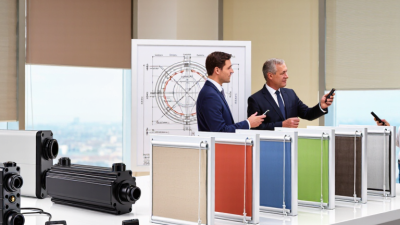
When buying automatic blinds for global projects, safety compliance needs more than a supplier’s certificate. Check the exact product, motor, control system, and installation method covered by each document. EN 13120 addresses safety requirements for internal window coverings, including accessible cords and operating components. ANSI/WCMA A100.1 focuses on window covering safety in the United States and Canada, especially cord-related risks. IEC 60335 covers electrical appliance safety, with relevant requirements for motor-operated shutters, awnings, and blinds.
Ask for current test reports, declarations of conformity, and the standard editions used. Confirm that the report matches the final production model, not an older sample. Small differences matter. A different motor or control voltage can change the assessment. Verify obstruction detection, emergency operation, overheating protection, and low-voltage components. Test these features with the blind installed, not only on a laboratory bench.
In project reviews, I also compare the compliance documents with the installation manual. The manual should show safe clearances, fixing points, wiring limits, and maintenance checks. Local electrical rules may add requirements beyond IEC 60335. That detail is easy to miss. I once treated a familiar standard as sufficient, but the project’s local authority required additional documentation. That mistake delayed approval. Keep a product traceability record, including batch numbers, software versions, and installer training evidence. Safety performance can weaken when installation teams improvise. Test again after commissioning.
A practical procurement checklist for evaluating automated window-covering systems across different markets.
| No. | Buying Tip | Relevant Standard or Topic | What to Verify | Recommended Evidence | Project Checkpoint |
|---|---|---|---|---|---|
| 1 | Define the blind configuration | Product classification | Confirm whether the product is an internal blind, roller shade, Roman shade, venetian blind, exterior shutter, awning, or another window-covering type. Safety requirements can vary by construction and operating method. | Product data sheet, dimensional drawings, operating description, and installation environment details. | Before requesting quotations or compliance documents. |
| 2 | Map the target-market requirements | Local regulations and applicable editions | Identify the destination countries, building type, intended users, and whether the project is residential, hospitality, healthcare, education, or commercial. A voluntary standard may not replace mandatory local legislation. | A country-by-country compliance matrix reviewed by the project’s regulatory or testing specialist. | During design development and before purchase-order approval. |
| 3 | Check EN 13120 applicability | EN 13120 Internal blinds |
For applicable internal blinds, verify requirements related to product construction, operation, safety devices, accessible cords or chains, and foreseeable misuse. Confirm the exact national adoption and current edition required for the project. | Declaration or test report identifying the exact product configuration, standard edition, test methods, and any limitations. | At technical submittal review, especially for projects accessible to children. |
| 4 | Check ANSI/WCMA A100.1 applicability | ANSI/WCMA A100.1 Safety of corded window-covering products |
For products supplied to markets using this standard, determine whether the design contains operating cords, inner cords, loops, or accessible pull components and verify the applicable safety provisions. | Independent laboratory report, product drawings showing cord locations, safety-device details, labels, and installation instructions. | Before approving samples for North American projects or projects referencing this standard. |
| 5 | Review the motor-drive safety basis | IEC 60335-2-97 Drives for shutters, awnings, blinds, and similar equipment |
Confirm that the drive system has been evaluated under the relevant particular requirements and, where applicable, in conjunction with the general requirements of IEC 60335-1. | Test report listing the drive model, rated input, operating mode, protection measures, abnormal-operation tests, and applicable standard editions. | During electrical design review and before integration into the building system. |
| 6 | Assess crushing and entrapment risks | Mechanical and functional safety | Check force limitation, obstacle detection, anti-pinch behavior where provided, stop controls, safe travel limits, and the risk of trapping fingers, clothing, or objects. | Risk assessment, force-measurement results where relevant, commissioning procedure, and fault-response documentation. | At prototype testing and on-site commissioning. |
| 7 | Verify electrical compatibility | Electrical safety and installation conditions | Match rated voltage, frequency, current, insulation, ingress protection, wiring method, earthing or protective measures, and environmental conditions with the project specification. | Electrical nameplate, wiring diagram, installation manual, protection requirements, and compatibility statement for the control system. | Before releasing electrical and controls drawings. |
| 8 | Confirm controls and emergency operation | Controls, automation, and fail-safe behavior | Verify wall controls, remote controls, sensors, group commands, manual override, behavior after power interruption, and access control for vulnerable or public areas. | Control sequence diagrams, software or configuration records, user instructions, and power-failure test results. | During mock-up testing and integrated building-system commissioning. |
| 9 | Demand complete safety documentation | Technical file and traceability | Ensure documents identify the tested model, motor, control unit, accessories, installation orientation, operating limits, and approved substitutions. Do not rely on a generic certificate for a materially different configuration. | Bill of materials, certificates or declarations, laboratory reports, drawings, manuals, labels, and revision-controlled technical files. | Before contract award and at every design revision. |
| 10 | Validate installation and maintenance | Lifecycle safety | Check fixing strength, clearances, access for servicing, cleaning restrictions, periodic inspection, replacement parts, and responsibilities after handover. | Installation checklist, maintenance schedule, inspection records, training materials, warranty terms, and handover documentation. | At site acceptance, handover, and scheduled maintenance reviews. |
For global projects, motor specifications matter more than attractive control features. Start with torque, measured in newton-metres (Nm). A wider or heavier blind needs more torque, especially when fabric friction, long tubes, and uneven installation are involved. Ask suppliers for continuous torque, not only peak torque. A 20% safety margin is practical, but it is not a universal rule. Site conditions can prove me wrong.
Speed affects daylight control and user comfort. A motor rated at 20 revolutions per minute may move a blind noticeably faster than one rated at 10 rpm. Request the full opening time, tube diameter, and load behind the speed figure. Otherwise, the number is incomplete. Duty cycle also deserves close attention. Some motors tolerate only a few operating cycles per hour, while larger projects may demand repeated adjustments throughout the day. Check cycles per hour, maximum running time, and thermal recovery.
Noise should be compared in dB(A), with the testing distance clearly stated. A motor recorded at 35 dB(A) in a controlled room may sound different beside glass, plaster, or a hollow ceiling. ISO 3744 provides a recognized method for determining sound power, while IEC 60704-1 supports consistent airborne-noise testing. The International Energy Agency reports that buildings use about 30% of global final energy, so efficient standby operation deserves attention. Ask for standby watts, operating efficiency, and test conditions. A quiet motor with poor duty performance is not a reliable choice. Neither is a powerful motor that overheats after repeated use.
For global projects, automatic blinds should be planned as building systems, not isolated window products. Confirm whether KNX, BACnet, or Matter will carry commands, status, and fault signals. KNX often suits room and lighting control. BACnet can connect shading with wider building management. Matter may simplify connected spaces, but gateway requirements still need checking. Do not assume one protocol solves every site.
Ask for open interface documents, point lists, and tested integration procedures before purchase. A trial room can expose address conflicts, delayed feedback, or incorrect blind direction. I have found commissioning time grows when wiring diagrams ignore local panel locations. Keep manual override available. It protects occupants during network faults and maintenance. RF performance needs measured evidence, not a brochure claim. Test through concrete walls, metal frames, and closed doors. Record signal strength at the farthest window. Dense buildings may require repeaters, but extra devices also create more failure points.
Match IP ratings to the installation environment. A dry interior recess needs less protection than a humid façade zone or exposed service area. Verify the rating for the complete assembly, not only the motor housing. Temperature, dust, condensation, and cleaning chemicals can change real performance. Specify regional power requirements, cybersecurity responsibilities, and firmware support in writing. This part is often overlooked. Matter is promising, yet interoperability can still be uneven across controllers. Recheck assumptions during site acceptance, because a perfect design on paper may behave differently behind real walls.
Plan Smart Integration: KNX, BACnet, Matter, RF Range, and IP Ratings
The chart compares the solid-particle and water-protection levels defined by IEC 60529 for commonly specified IP ratings. Higher values indicate stronger protection within each rating category, but the two scales measure different hazards.
For project integration, KNX TP uses a nominal 9.6 kbit/s bus rate, while BACnet MS/TP commonly supports selectable rates from 9.6 to 115.2 kbit/s. Matter can operate over Ethernet, Wi-Fi, or Thread, so actual performance depends on the selected transport. RF range must be validated on site because walls, metal structures, antenna placement, and interference can significantly affect reliability.
For global automatic blind projects, delivery risk starts before the purchase order. Confirm the minimum order quantity for each size, fabric, motor, and control option. A low unit price may hide a high MOQ for customized parts. Ask the supplier to provide written production lead times, not only shipping estimates. Add time for sampling, approval, customs clearance, and site delivery. A two-week buffer is often more realistic than a perfect schedule.
Small details matter. Require a warranty document covering motors, controls, wiring, and installation-related faults. Check when the warranty begins: shipment, commissioning, or final acceptance. Request a spare-parts list with prices and recommended quantities for three years. Keep extra motors, power supplies, remotes, and brackets near major sites. One missing bracket can delay an entire floor. I have seen this happen.
Testing should match real project conditions. Inspect noise, travel limits, obstacle detection, battery performance, and group control. Test several units from different production batches. For large orders, request a factory acceptance test with signed records, photos, and serial numbers. Repeat key checks after installation. This step is sometimes rushed. That is a mistake. Weather, voltage differences, dust, and weak network signals can expose failures that factory testing misses. Keep a replacement plan for damaged cartons and late components, even when the original forecast looks reliable.